 GRI
GRIHigh Street retail innovation trends vs luxury Chinese spend
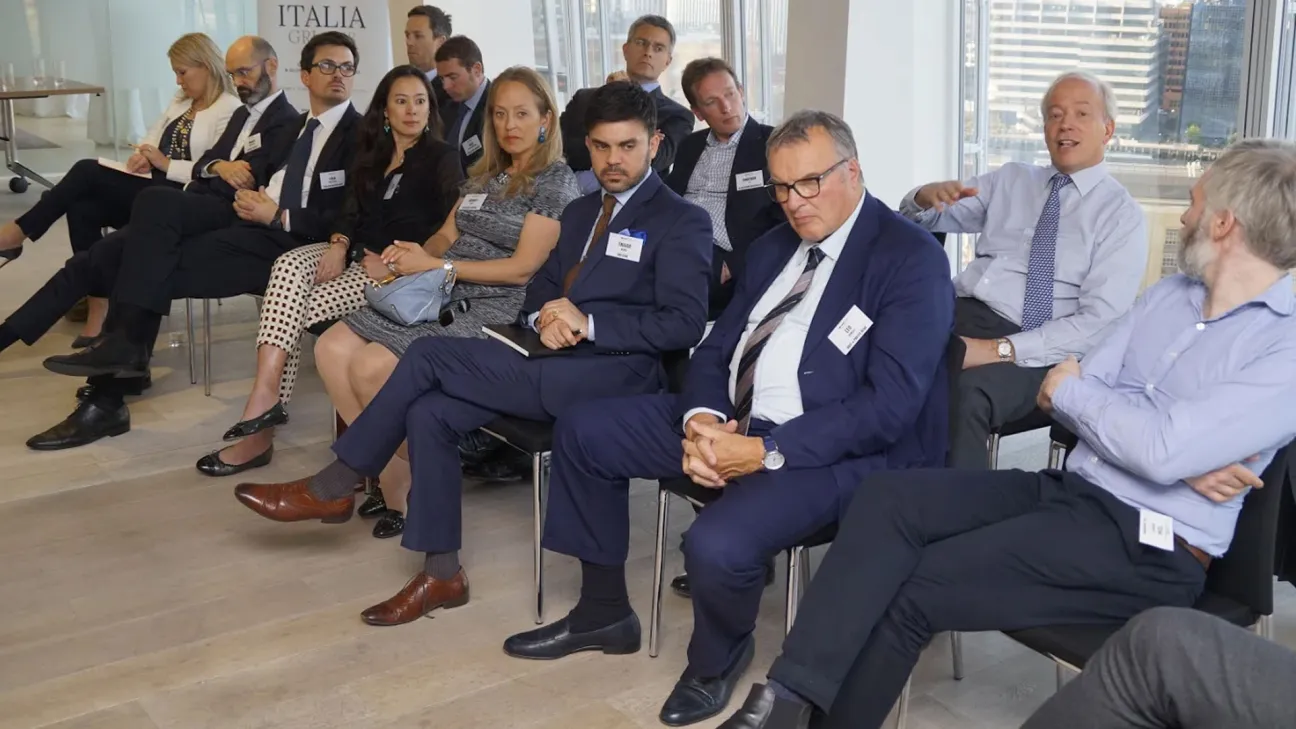
GRI Club members gathered to discuss the stability of high street retail and strategies to regenerate the assets.
April 18, 2018Real Estate
Experiential retail trends rank top of the agenda for long term stability in the asset class for global investors. And yet, luxury stores in prime location, outlets, pop ups, F&B as well as understanding customer footfall through digitisation were also all seen as critical factors in how retail is being reshaped, re-imagined and re-managed as investment portfolios.
This is why, on 18th April, GRI Club members from across Europe gathered to discuss the stability of high street retail as an asset as well as strategies to regenerate assets, identify like minded peers and develop new business friendships. Co-hosted by REAG Duff & Phelps at the Shard, attendees were also treated to a sparking aperitivo networking reception.
The discussion Chair Paolo Magnaschi kickstarted the debate by highlighting the current state of retail values. Most portfolios seem to have the majority of investors run for the hills. A few members agreed that the rise of e-commerce and convenience shopping plus a squeeze on consumer spend has contributed to the steady decline in vacancy and rental income over recent years.
It was challenged whether high street retail was indeed a stable market; yields are low in many cities and the tenant demands are changing from longer to shorter and more flexible leases which is proving difficult for investors to back. Some felt that it becoming increasingly difficult to find scale at reasonable prices for city centre demand. To win business, it was argued that investors and asset owners need to be much closer to their tenants to secure long term partnerships; a central management plan would be essential to improve consumer footfall on the high street similar to how outlets and shopping malls manage the customer and consumer experiences.
UK, Spain, France, Italy and German markets were put under the microscope and investment appetite was tested. Whilst the UK was proving a hard market to master, a much rosier picture was emerging for core high street, especially luxury retail in Paris and Milan as they present long term growth potential especially given the rise of tourism and wealth spend.
Omni channel
The room spent some time on the ‘myth’ behind the growth of omni channel retail and whether e-commerce was such a threat to retail property. If omni channel is cleverly integrated, it can prove to be a good ally. Whilst we do need to diversify portfolios to account for last mile delivery, convenience click n’ collect and new build warehousing close to consumers; investors must also be aware to account for their spend and impacts on ROI.
Ultimately, our discussion concluded that while the asset class is clearly under stress, fundamentals still point to growth and long term stability; providing investors embrace the new economy of tenant demand. This might be achieved by downsizing, investing further into last mile delivery, embracing short term leases and providing flexibility or moving into new locations where there is greater footfall from tourists.
The core consideration and growth driver was experiential driven assets such as mixed-use shopping parks, outlets and integrated high streets embracing a dynamic mix of F&B, community experiences, sights and luxury stores. If this is so, retail investors need to dig much deeper than simply churning out the age old ‘location, location, location’ mantra. Short term leases, showroom culture, technology and a deeper understanding of how to connect with and fulfil the customer experience are all at the top of the consideration list for smarter retail investments.
This is why, on 18th April, GRI Club members from across Europe gathered to discuss the stability of high street retail as an asset as well as strategies to regenerate assets, identify like minded peers and develop new business friendships. Co-hosted by REAG Duff & Phelps at the Shard, attendees were also treated to a sparking aperitivo networking reception.
The discussion Chair Paolo Magnaschi kickstarted the debate by highlighting the current state of retail values. Most portfolios seem to have the majority of investors run for the hills. A few members agreed that the rise of e-commerce and convenience shopping plus a squeeze on consumer spend has contributed to the steady decline in vacancy and rental income over recent years.
It was challenged whether high street retail was indeed a stable market; yields are low in many cities and the tenant demands are changing from longer to shorter and more flexible leases which is proving difficult for investors to back. Some felt that it becoming increasingly difficult to find scale at reasonable prices for city centre demand. To win business, it was argued that investors and asset owners need to be much closer to their tenants to secure long term partnerships; a central management plan would be essential to improve consumer footfall on the high street similar to how outlets and shopping malls manage the customer and consumer experiences.
UK, Spain, France, Italy and German markets were put under the microscope and investment appetite was tested. Whilst the UK was proving a hard market to master, a much rosier picture was emerging for core high street, especially luxury retail in Paris and Milan as they present long term growth potential especially given the rise of tourism and wealth spend.
Omni channel
The room spent some time on the ‘myth’ behind the growth of omni channel retail and whether e-commerce was such a threat to retail property. If omni channel is cleverly integrated, it can prove to be a good ally. Whilst we do need to diversify portfolios to account for last mile delivery, convenience click n’ collect and new build warehousing close to consumers; investors must also be aware to account for their spend and impacts on ROI.
Ultimately, our discussion concluded that while the asset class is clearly under stress, fundamentals still point to growth and long term stability; providing investors embrace the new economy of tenant demand. This might be achieved by downsizing, investing further into last mile delivery, embracing short term leases and providing flexibility or moving into new locations where there is greater footfall from tourists.
The core consideration and growth driver was experiential driven assets such as mixed-use shopping parks, outlets and integrated high streets embracing a dynamic mix of F&B, community experiences, sights and luxury stores. If this is so, retail investors need to dig much deeper than simply churning out the age old ‘location, location, location’ mantra. Short term leases, showroom culture, technology and a deeper understanding of how to connect with and fulfil the customer experience are all at the top of the consideration list for smarter retail investments.