 GRI
GRIGRI Residential Europe - Creating a new generation of assets
Senior real estate investors, lenders and developers gathered to share their take on the European residential market.
December 10, 2018Real Estate
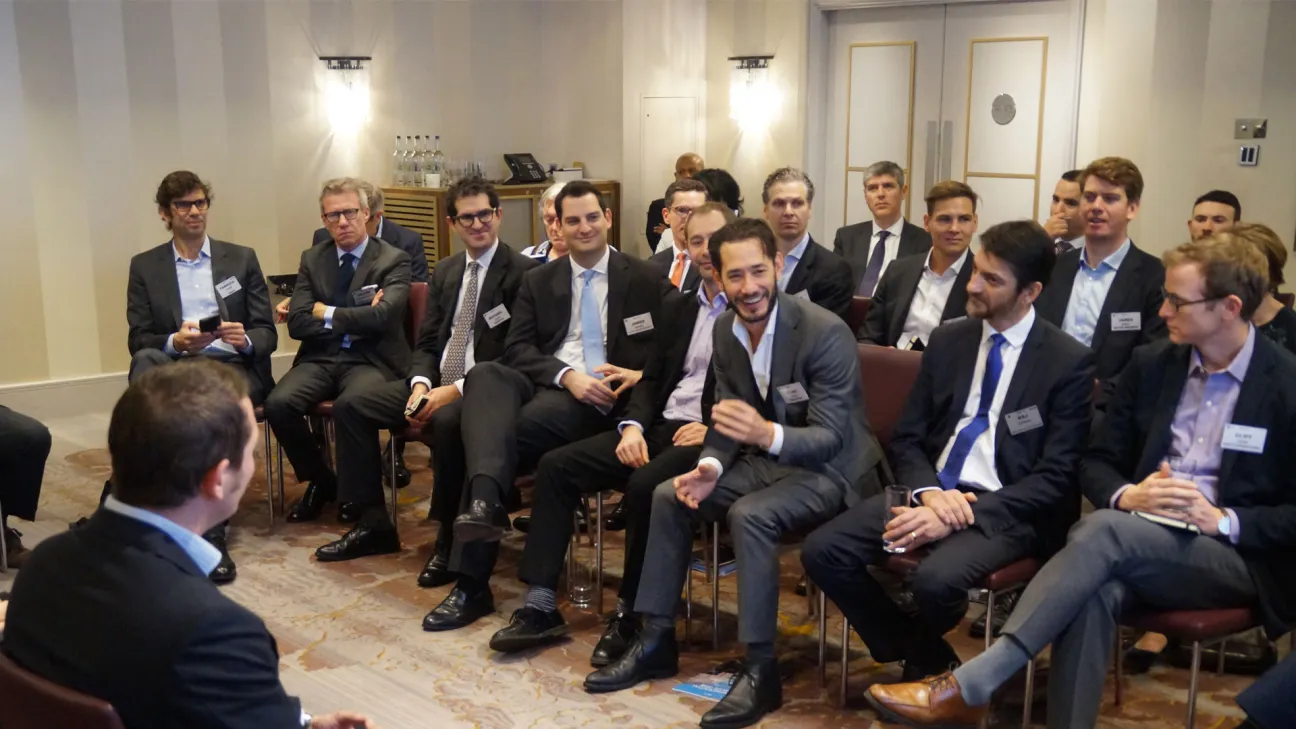
Europe’s senior real estate investors, lenders and developers gathered in London on the 28-29 November to share their take on the pan-European residential market at GRI Residential Europe 2018. Topics of debate included whether the build-to-rent (BTR) sector has finally become Institutionally recognised, whether ultra-low yields might trigger a Europe-wide downturn, and what the best investment strategies are, from both a debt and an equity perspective. Sessions were divided into geographies, sectors and investment strategies. Here is what was discussed in some of them:
UK & Ireland build-to-rent - a stuttering start
The business case for creating build-to-rent developments, and for institutional investors to back them, was already well made at GRI Residential Europe’s plenary, panel discussion. Discussions in the UK & Ireland PRS stream focused especially on where to find product and the affordability of private rented sector (PRS) and BTR models in London, Dublin, Manchester and Cork. The majority consensus held that whilst PRS is gaining in popularity as a low-yield but stable asset class, Brexit and other political, fiscal and economic uncertainties, are stalling investment appetite, particularly outside London.
Cross-border lessons
Markets could learn from each other, it was agreed in the discussion on Dach countries and Northern Europe. The most similar markets to Germany were considered to be Sweden and the Netherlands, while France looked the most interesting in the long term. Replicating sub-segment residential products, such as student housing, might be the easiest way to go pan-European, participants agreed, but it was necessary to be aware of cross-border differences in regulations: in Germany, for example, rent is regulated by law, whereas in Sweden regulated by Swedish Union of Tenants. And needless to say, some German investors were not considering UK at the present time, because of Brexit.
Much of the discussion focused on Germany and the importance of the service element of residential developments, albeit more at the luxury/high-end. It was noted that some hotels were sharing amenities and facilities with residential units, and that institutional investors needed to focus more on their tenants’ service needs, with a higher level of amenities needed in the future. Although there was a word of caution here, that it would be wrong to assume that a large part of the population could afford to pay high rental prices. Operators, not asset or fund managers, were now considered the most important players in the market. And the next asset class expected to take off? Healthcare.
Unlocking Spanish supply
The macro view of Madrid and Barcelona is a strong, long-term growth story and the discussion on Spain attracted both local and global players, curious to understand how to enter the Spanish market.
It was agreed that there was an ultra-low supply of build-to-rent in Spain, besides a huge amount of embedded value in rental properties, with rent rises of up to 40% expected in Madrid, something that has already been reflected in 25% rent raises within Sareb’s REIT, for instance.
However, challenges to building out supply include the fact that projected rents have had a knock-on effect on land prices. It was also agreed that there is a lack of market information in Spain, that construction costs continue to inflate by 15% to 20% - although that is flattening now as sub-contractors ramp up - and that for banks, who look at BTR as as a form of project finance, the numbers do not add up.
CEE & SEE potential
There has been something of a renaissance in the private rented sector, as participants discussed, with demand for home ownership in CEE and SEE decreasing and with the younger generation becoming keener on renting. However, the sector has yet to be institutionalised and scaling up remains a major challenge. In order to attract international, institutional investors, one suggestion was to combine a PRS scheme with a build-to-sell project in order to reach a sufficient scale. Another recommendation was that investors and developers should look at producing BTR units by the 100, instead of by the 1,000, in order to minimise risks. It was noted that investment strategies for BTR investors were generally city-specific and targeted places with foreign workers, as locals found BTR rents too high. In some countries, another issue for international investors was currency risk, as well as a lack of clear exit routes. But the consensus was that BTR/PRS would eventually become a significant market and, when the time came, would happen very quickly too.
Senior living and retirement homes, although interesting, were not considered big enough markets in the CEE and SEE. Again, the asset class has not been institutionalised. Student housing followed a similar pattern to BTR, focused on cities with universities that have affiliations with foreign universities and offered courses to foreign students. Some investors expressed the view that although student housing was less risky because it could always be converted into other forms of residential property, but it was essential to have an operator and still too early for the sector in CEE and SEE to become institutionalised.
Changing perceptions of Italy
Italy represents a great opportunity, participants agreed in a discussion looking at risk diversification in Italy, and the possibilities ranging across all asset classes, from residential to student housing and hospitality. The fundamentals are largely based on a demographically-driven need for new homes, with families fragmenting and the average number of members in a household having dropped from 3.4 to 2.3 people, and down even to 1.8 in Milan.
However, global investors - who were present and keen to enter the market, if only ‘to go right when others go left’ - still saw Italy as a hard sell to their investment committees. Italy, said one, was like Turkey and Colombia, offering yield but risky too. Although the fundamentals were considered good, the political risks were considered too big for the yield. All it needed, it was suggested, was a change of perception - like the Macron effect in France - to transmit a sense of stability, programme and planning.
Student housing roll-out
UK is the most mature market for student housing, participants largely agreed, at least when it comes to the ‘hardware’ side of student housing. On the ‘software’ side - the operational side covering pastoral and customer care - it was agreed that there was no room for complacency, and that operators needed to learn from the hospitality sector.
Participants considered how far advanced different markets were across Europe, in terms of hardware and software development, and how cultural differences were important - including the need to provide food and holistic life management in Spain. Back in the UK, one of biggest risks now was identified as university quality and a potentially bifurcated market for higher education, in which the losers would disappear and the winners get bigger.
Raising capital for development
Finding finance at the development stage can be hard work, but as was made clear to participants in the discussion on raising capital for development, there are UK government funds available to step in, where banks might not. The UK government has also been working to unlock development land by building roads.
Build-to-rent was viewed as embryonic from a financing perspective, at least on the debt side, and a UK government guarantee scheme designed to encourage bank lenders was now capped out.
Post-planning, shovel-ready projects, it was agreed, was where institutions could come in as investors. However, in getting to that stage, developers needed to do their due diligence in order to find the right finance providers - those who could understand their project. Non-bank lenders were ready to fill any voids left by traditional lenders; one alternative discussed, from a family office, was based on putting down 20% cash collateral against 100% loan-to-value debt.
Conclusion
The case for investing in new residential developments was well made at GRI Residential Europe 2018, especially when weighed up against sectors such as offices, that are going through radical, structural changes. The fundamentals of residential real estate all point to stable, long- term income generation. But investor appetite and developer preference seems only to be at the larger-scale end of the spectrum, especially student housing and mid-range PRS/BTR. Capital appears scarcer for niche products such as co-living, micro- housing and apart-hotels, that need to be cycle- and liquidity- tested before being backed with confidence.
Residential real estate might look like the safest bet, what then does the future hold for residential real estate? One thing is for sure, which is that only a thorough understanding of demographics, pricing due diligence and working with the right partner, be it an investor, lender or developer, will help create a new generation of residential assets.
UK & Ireland build-to-rent - a stuttering start
The business case for creating build-to-rent developments, and for institutional investors to back them, was already well made at GRI Residential Europe’s plenary, panel discussion. Discussions in the UK & Ireland PRS stream focused especially on where to find product and the affordability of private rented sector (PRS) and BTR models in London, Dublin, Manchester and Cork. The majority consensus held that whilst PRS is gaining in popularity as a low-yield but stable asset class, Brexit and other political, fiscal and economic uncertainties, are stalling investment appetite, particularly outside London.
Cross-border lessons
Markets could learn from each other, it was agreed in the discussion on Dach countries and Northern Europe. The most similar markets to Germany were considered to be Sweden and the Netherlands, while France looked the most interesting in the long term. Replicating sub-segment residential products, such as student housing, might be the easiest way to go pan-European, participants agreed, but it was necessary to be aware of cross-border differences in regulations: in Germany, for example, rent is regulated by law, whereas in Sweden regulated by Swedish Union of Tenants. And needless to say, some German investors were not considering UK at the present time, because of Brexit.
Much of the discussion focused on Germany and the importance of the service element of residential developments, albeit more at the luxury/high-end. It was noted that some hotels were sharing amenities and facilities with residential units, and that institutional investors needed to focus more on their tenants’ service needs, with a higher level of amenities needed in the future. Although there was a word of caution here, that it would be wrong to assume that a large part of the population could afford to pay high rental prices. Operators, not asset or fund managers, were now considered the most important players in the market. And the next asset class expected to take off? Healthcare.
Unlocking Spanish supply
The macro view of Madrid and Barcelona is a strong, long-term growth story and the discussion on Spain attracted both local and global players, curious to understand how to enter the Spanish market.
It was agreed that there was an ultra-low supply of build-to-rent in Spain, besides a huge amount of embedded value in rental properties, with rent rises of up to 40% expected in Madrid, something that has already been reflected in 25% rent raises within Sareb’s REIT, for instance.
However, challenges to building out supply include the fact that projected rents have had a knock-on effect on land prices. It was also agreed that there is a lack of market information in Spain, that construction costs continue to inflate by 15% to 20% - although that is flattening now as sub-contractors ramp up - and that for banks, who look at BTR as as a form of project finance, the numbers do not add up.
CEE & SEE potential
There has been something of a renaissance in the private rented sector, as participants discussed, with demand for home ownership in CEE and SEE decreasing and with the younger generation becoming keener on renting. However, the sector has yet to be institutionalised and scaling up remains a major challenge. In order to attract international, institutional investors, one suggestion was to combine a PRS scheme with a build-to-sell project in order to reach a sufficient scale. Another recommendation was that investors and developers should look at producing BTR units by the 100, instead of by the 1,000, in order to minimise risks. It was noted that investment strategies for BTR investors were generally city-specific and targeted places with foreign workers, as locals found BTR rents too high. In some countries, another issue for international investors was currency risk, as well as a lack of clear exit routes. But the consensus was that BTR/PRS would eventually become a significant market and, when the time came, would happen very quickly too.
Senior living and retirement homes, although interesting, were not considered big enough markets in the CEE and SEE. Again, the asset class has not been institutionalised. Student housing followed a similar pattern to BTR, focused on cities with universities that have affiliations with foreign universities and offered courses to foreign students. Some investors expressed the view that although student housing was less risky because it could always be converted into other forms of residential property, but it was essential to have an operator and still too early for the sector in CEE and SEE to become institutionalised.
Changing perceptions of Italy
Italy represents a great opportunity, participants agreed in a discussion looking at risk diversification in Italy, and the possibilities ranging across all asset classes, from residential to student housing and hospitality. The fundamentals are largely based on a demographically-driven need for new homes, with families fragmenting and the average number of members in a household having dropped from 3.4 to 2.3 people, and down even to 1.8 in Milan.
However, global investors - who were present and keen to enter the market, if only ‘to go right when others go left’ - still saw Italy as a hard sell to their investment committees. Italy, said one, was like Turkey and Colombia, offering yield but risky too. Although the fundamentals were considered good, the political risks were considered too big for the yield. All it needed, it was suggested, was a change of perception - like the Macron effect in France - to transmit a sense of stability, programme and planning.
Student housing roll-out
UK is the most mature market for student housing, participants largely agreed, at least when it comes to the ‘hardware’ side of student housing. On the ‘software’ side - the operational side covering pastoral and customer care - it was agreed that there was no room for complacency, and that operators needed to learn from the hospitality sector.
Participants considered how far advanced different markets were across Europe, in terms of hardware and software development, and how cultural differences were important - including the need to provide food and holistic life management in Spain. Back in the UK, one of biggest risks now was identified as university quality and a potentially bifurcated market for higher education, in which the losers would disappear and the winners get bigger.
Raising capital for development
Finding finance at the development stage can be hard work, but as was made clear to participants in the discussion on raising capital for development, there are UK government funds available to step in, where banks might not. The UK government has also been working to unlock development land by building roads.
Build-to-rent was viewed as embryonic from a financing perspective, at least on the debt side, and a UK government guarantee scheme designed to encourage bank lenders was now capped out.
Post-planning, shovel-ready projects, it was agreed, was where institutions could come in as investors. However, in getting to that stage, developers needed to do their due diligence in order to find the right finance providers - those who could understand their project. Non-bank lenders were ready to fill any voids left by traditional lenders; one alternative discussed, from a family office, was based on putting down 20% cash collateral against 100% loan-to-value debt.
Conclusion
The case for investing in new residential developments was well made at GRI Residential Europe 2018, especially when weighed up against sectors such as offices, that are going through radical, structural changes. The fundamentals of residential real estate all point to stable, long- term income generation. But investor appetite and developer preference seems only to be at the larger-scale end of the spectrum, especially student housing and mid-range PRS/BTR. Capital appears scarcer for niche products such as co-living, micro- housing and apart-hotels, that need to be cycle- and liquidity- tested before being backed with confidence.
Residential real estate might look like the safest bet, what then does the future hold for residential real estate? One thing is for sure, which is that only a thorough understanding of demographics, pricing due diligence and working with the right partner, be it an investor, lender or developer, will help create a new generation of residential assets.