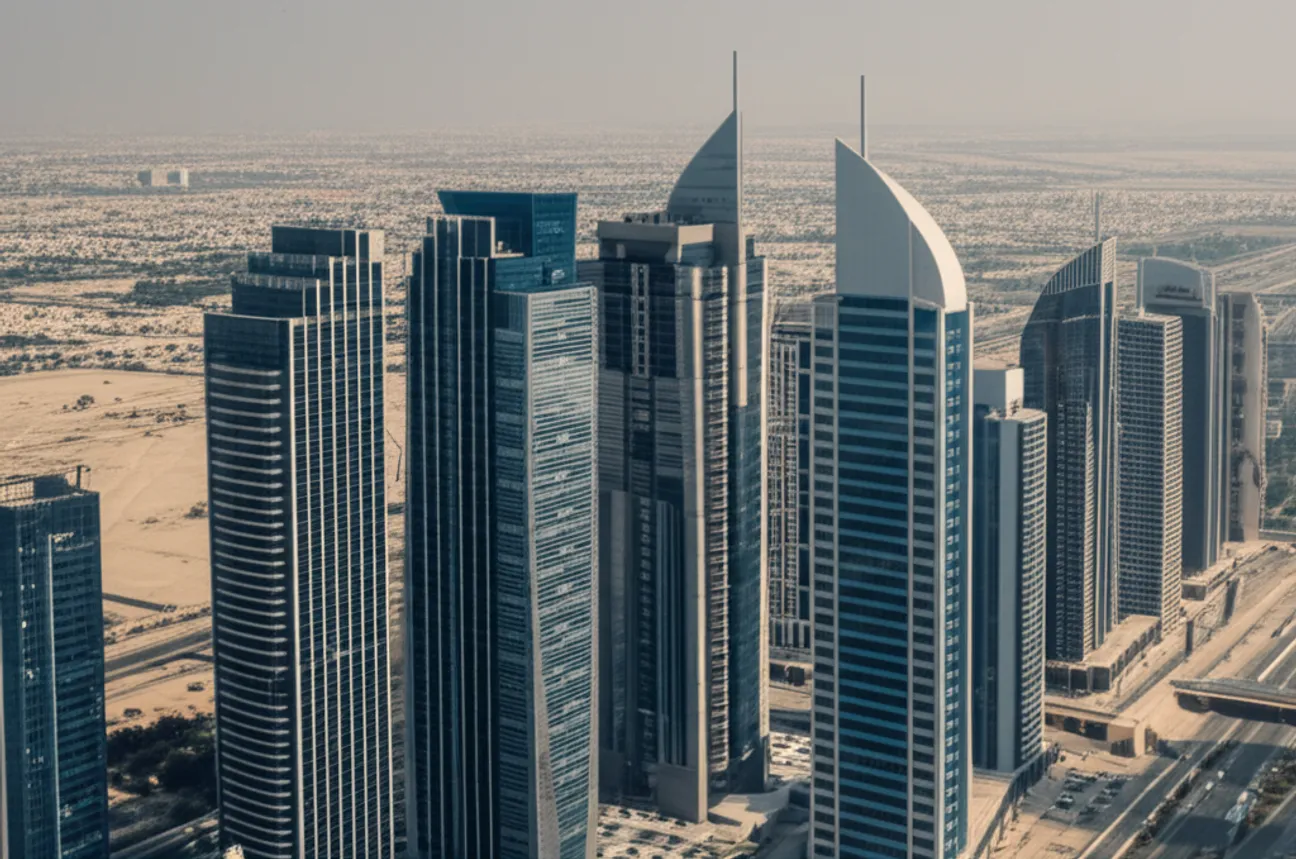
GCC's next-generation developers: how a rising cohort is redefining local capital deployment
From Abdulla Bin Habtoor's sovereign-aligned plays to Abdulaziz Al Bassam's cross-border deals, a new tier of national operators emerges beneath the mega-develo
Executive Summary
Key Takeaways
A USD 141.2 billion market opens space for a new developer tier
The GCC real estate market reached USD 141.2 billion in 2025, according to IMARC Group, and is estimated to grow to USD 260.3 billion by 2034 at a compound annual growth rate of 7.03%. That trajectory, sustained by sovereign diversification strategies and record transaction volumes, is creating structural room for a generation of national developer-operators who sit below the mega-developers yet command increasingly significant project pipelines and capital networks.
While Aldar, Emaar, and ROSHN continue to anchor the region's largest masterplans, a distinct cohort of Emirati and Saudi principals is carving out competitive positions in branded residences, hospitality-led mixed-use assets, and cross-border real estate investment. GRI Institute's member data and search analytics confirm growing institutional interest in these figures: queries for Abdulla Bin Habtoor, Abdulaziz Al Bassam, and related entities are registering rising impressions across GRI's platform, signalling that the global investment community is actively seeking intelligence on this emerging operator class.
Who are the next-generation GCC developer-operators reshaping the market?
Three profiles illustrate the breadth of this cohort, spanning sovereign-aligned development in Dubai, international deal execution from Riyadh, and diaspora capital flows connecting the Gulf to Latin America.
Abdulla Bin Habtoor and Shamal Holding
Abdulla Bin Habtoor serves as CEO of Shamal Holding, a sovereign-aligned investment firm whose direct real estate portfolio includes Dubai Harbour and the upcoming Baccarat Hotel & Residences, according to GRI Institute and Shamal Holding disclosures. Shamal Holding should be clearly distinguished from the Al Habtoor Group; it operates as a separate entity with its own governance structure and investment mandate tied to sovereign capital.
Dubai Harbour represents one of the emirate's most prominent waterfront mixed-use destinations, combining superyacht marina infrastructure with residential, retail, and hospitality components. The addition of the Baccarat Hotel & Residences brand to the portfolio positions Shamal at the intersection of ultra-luxury hospitality and branded residential product, a segment experiencing accelerated demand across the UAE.
Bin Habtoor's positioning is significant because Shamal Holding operates with the strategic patience and capital depth characteristic of sovereign-adjacent vehicles while maintaining the execution agility of a privately led firm. This hybrid model allows the company to pursue large-format, infrastructure-heavy projects that require both regulatory alignment and long development horizons.
Abdulaziz Al Bassam and AIMS Investment
Abdulaziz Al Bassam leads AIMS Investment, also known as AIMS Holding, in Saudi Arabia. The firm executes direct international real estate transactions, including the 2024 sale of a Manchester residential portfolio, according to GRI Institute data. This cross-border activity places Al Bassam within a small but influential group of Saudi principals deploying capital beyond the Kingdom's borders even as domestic supply expands aggressively.
Saudi Arabia's residential supply is estimated to grow by 499,000 units, reaching 3.45 million by 2030, led by giga-projects in Riyadh and Jeddah, according to Alpen Capital. Against that domestic expansion, Al Bassam's international disposition strategy suggests a sophisticated approach to portfolio rotation, capitalising on mature-market liquidity windows while maintaining optionality in the Kingdom's fast-growing domestic pipeline.
The regulatory environment is also evolving in ways that could amplify the role of operators like Al Bassam. Royal Decree No. M/14, the Law on Non-Saudis Ownership of Real Estate, was approved on July 14, 2025, and became effective in January 2026. The decree expands the possibility for non-Saudis to own and benefit from real estate in designated zones in Saudi Arabia, including specific provisions for Makkah and Madinah. For Saudi-based investment firms with international networks, this regulatory opening creates new inbound capital channels that complement their outbound strategies.
Nader Fares, LP Bens, and the diaspora capital bridge
Nader Fares is the Managing Partner and CEO of LP Bens, formally LP Administradora, a real estate firm managing commercial, industrial, and logistics assets primarily for the Marabraz family in Brazil, according to GRI Institute and SiiLA data. Fares is a Brazilian billionaire of Arab descent, and his profile represents the diaspora capital dimension of GCC real estate rather than a domestic operator model.
LP Bens' verified operations are concentrated in Brazil, where the firm manages a diversified portfolio spanning commercial and logistics segments. The connection to the GCC is one of heritage, network, and potential capital deployment rather than current operational footprint. For GCC developers seeking Latin American institutional or family-office capital, however, Fares represents a high-value node in the cross-border capital graph. GRI Institute's event programming has consistently highlighted the importance of these diaspora bridges in channelling non-traditional capital into Gulf real estate markets.
How does this cohort compete against tier-1 mega-developers?
The competitive positioning of next-generation national developers differs fundamentally from the scale-driven model of Aldar, Emaar, or ROSHN. Three structural advantages define their approach.
First, asset specificity. Where mega-developers pursue city-scale masterplans, operators like Shamal Holding concentrate on high-value, brand-intensive single assets or districts. The Baccarat Hotel & Residences exemplifies this strategy: a globally recognised luxury brand deployed on a single, premium site, generating outsized revenue per square metre without the capital intensity of a 50-million-square-foot masterplan.
Second, capital flexibility. Sovereign-aligned but privately governed vehicles can access patient capital without the quarterly disclosure obligations of listed mega-developers. This allows longer hold periods and more creative structuring, particularly in hospitality and branded residential segments where development timelines are extended by brand negotiation and fit-out requirements.
Third, cross-border optionality. Al Bassam's Manchester portfolio transaction and the broader pattern of Saudi investment firms executing international deals demonstrate that this cohort treats global real estate as an integrated portfolio rather than a purely domestic mandate. The ability to recycle capital across geographies provides a diversification benefit that purely domestic developers cannot replicate.
What does record UAE transaction volume mean for emerging operators?
In 2023, the total figure for real estate deals in the UAE stood at a record AED 893 billion, according to IMARC Group. That volume reflects both primary sales from master developers and a deep secondary market, but it also confirms that the emirate's regulatory and market infrastructure can absorb significant new supply from mid-tier operators without liquidity constraints.
Dubai's Law No. 7 of 2006, updated in 2025, governs property ownership and allows foreign nationals to buy freehold property in designated areas. The 2025 updates expanded freehold zones and introduced stricter escrow and developer compliance regulations. For emerging developers, these regulatory enhancements serve a dual purpose: they expand the addressable buyer pool by opening new zones to foreign ownership while simultaneously raising compliance thresholds that reward well-capitalised, professionally managed operators and penalise undercapitalised entrants.
This regulatory tightening benefits the next-generation cohort precisely because their sovereign alignment and institutional capital structures position them above the compliance floor. Operators like Shamal Holding, with sovereign-grade governance frameworks, are well placed to navigate stricter escrow requirements and developer registration protocols.
Regional supply growth creates structural demand for specialised operators
Regional residential supply in the GCC is expected to increase from approximately 6.26 million units in 2025 to 7.28 million units by 2030, according to Alpen Capital. That increment of roughly one million units across five years cannot be delivered by tier-1 mega-developers alone. The pipeline requires a functioning ecosystem of mid-tier national operators capable of executing projects across luxury residential, hospitality, and mixed-use segments.
The next-generation cohort profiled here represents the leading edge of that ecosystem. Their capital structures blend sovereign alignment with private-sector agility. Their project selection favours brand-intensive, high-margin assets over volume-driven masterplans. And their cross-border networks, whether through international deal execution or diaspora capital bridges, provide access to diversified funding sources that reduce concentration risk.
GRI Institute will continue to track these operators through its member network and event programming across the GCC. As the region's real estate market moves toward its projected USD 260.3 billion valuation by 2034, the competitive dynamics between mega-developers and this emerging national cohort will be among the most consequential trends shaping capital allocation in Gulf real estate.
For institutional investors, family offices, and international operators seeking partnerships in the GCC, understanding the positioning and pipeline of these next-generation developers is no longer optional. It is a prerequisite for informed capital deployment in one of the world's fastest-growing real estate markets.