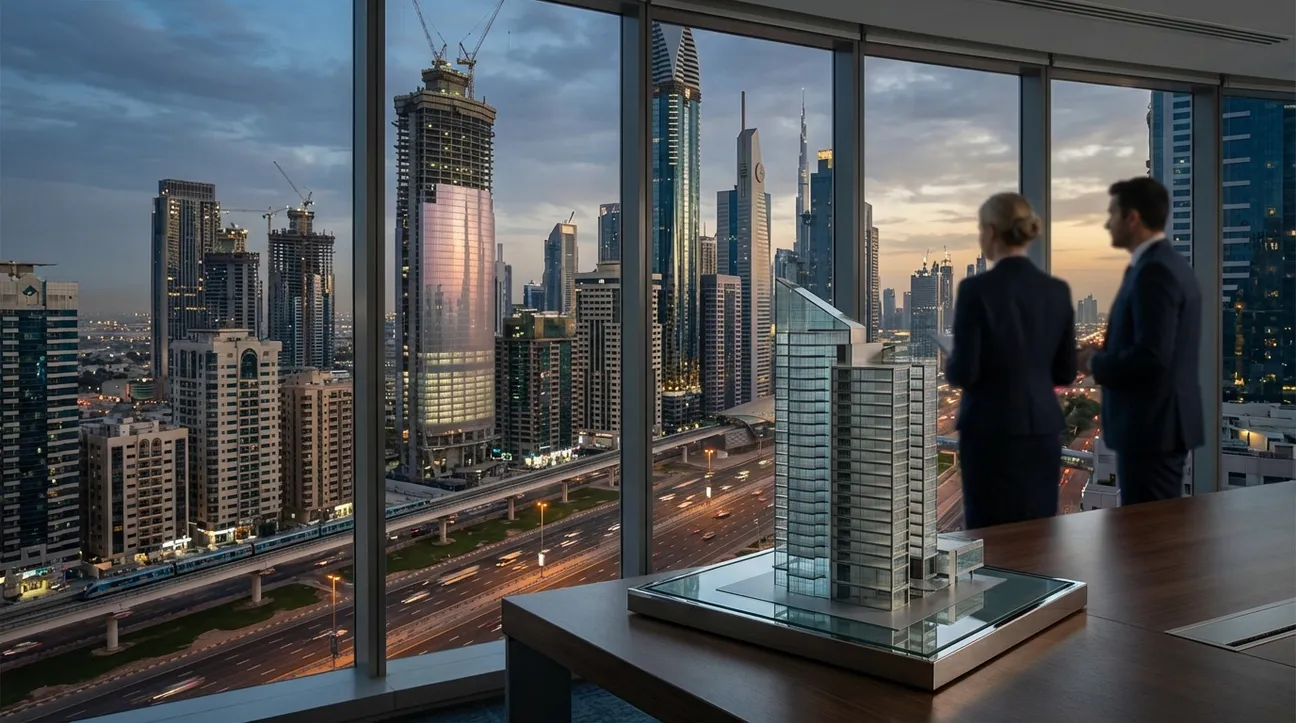
GCC branded residences shift from hotel operators to lifestyle brands in a pipeline reshaping luxury real estate
Standalone lifestyle-branded schemes now account for 30% of the global pipeline as fashion, design and sport labels redraw the economics of Gulf luxury living.
Executive Summary
Key Takeaways
- Standalone lifestyle-branded residences grew from 18% of completed schemes to 30% of the global pipeline, displacing hotel-operator partnerships.
- Dubai leads globally with 151 branded residence schemes; the UAE totals 196 projects.
- Lifestyle brand licensors provide design identity and licensing fees but no ongoing property management, shifting operational risk to developers.
- Licensing fee structures between lifestyle brands and GCC developers remain opaque, complicating institutional underwriting.
- Saudi Arabia's Foreign Ownership Law (effective January 2026) is set to accelerate international capital into branded residences.
- Knight Frank forecasts over 1,019 branded residence schemes globally by 2030.
Standalone branded residences, those developed without a hotel-operator partner, have grown from 18% of completed schemes globally to 30% of the pipeline, according to Knight Frank. The shift marks a structural inflection point for the GCC, where Dubai alone counts 151 branded residence schemes and the UAE totals 196 projects across various stages of delivery. Behind the numbers lies a quieter transformation: the brand licensors entering Gulf real estate are increasingly fashion houses, automotive marques and lifestyle labels rather than hospitality groups, and the ownership structures behind those brands are drawing growing attention from investors and developers alike.
A USD 141.2 billion market with a new brand architecture
The GCC real estate market reached USD 141.2 billion in 2025, with the UAE commanding a dominant 61.1% share, according to IMARC Group. Projections from the same source point to USD 260.3 billion by 2034 at a 7.03% compound annual growth rate. Within that expanding envelope, branded residences represent one of the fastest-evolving segments, not merely in volume but in the type of brand partner attached to each project.
Dubai leads the world in branded residence development. Data from Savills Middle East puts the city at 151 schemes, comprising 64 completed and 87 in the pipeline. The UAE's broader tally of 196 branded residential projects includes emerging clusters in Ras Al Khaimah, with 24 pipeline schemes, and Abu Dhabi, with 12 pipeline schemes. Globally, Knight Frank forecasts that branded residences will reach 1,019 schemes with more than 162,000 units by 2030.
The composition of brand partners within that pipeline is changing rapidly. Hotel-aligned schemes dropped from 82% of completed branded residences globally to 70% of pipeline schemes, while standalone developments, those tied to lifestyle, fashion or design brands without a hospitality management agreement, rose from 18% to 30%, according to Knight Frank.
This is a meaningful rebalancing. Standalone lifestyle-branded projects carry a different capital structure, a different operating model and a different set of risks compared with hotel-branded residences, and they demand a fundamentally different due diligence approach from both developers and institutional investors.
Who owns the lifestyle brands entering GCC real estate?
One of the least examined dimensions of the branded residences boom is the identity and corporate structure of the brand licensors themselves. Developers such as Emaar and Aldar attract sustained coverage, but the entities holding the intellectual property on the brand side remain comparatively opaque.
A case in point is Beverly Hills Polo Club, a lifestyle brand that has expanded into branded residential concepts in the Gulf region. Eli Haddad is the Managing Partner of Lifestyle Equities CV, the corporate entity that owns the Beverly Hills Polo Club brand, according to GRI Institute records. Lifestyle Equities CV is distinct from the real estate developers it partners with, and the licensing relationship between brand owner and developer follows a fundamentally different economic logic than a hotel management agreement.
In hospitality-branded residences, an operator such as Four Seasons or Marriott typically provides property management services, brand standards and access to loyalty programmes in exchange for management fees and, in some cases, key-money payments. In lifestyle-branded residences, the brand licensor grants the right to use its name, aesthetic identity and design language but does not operate the property. Revenue flows to the licensor primarily through licensing fees negotiated on a project-by-project basis.
The distinction matters for buyers, developers and capital allocators. In a lifestyle-branded scheme, the ongoing service proposition rests with the developer or a third-party facility manager rather than with the brand itself, which changes the risk profile and the long-term value proposition of the asset.
How are international developers and investors positioning for the GCC branded living segment?
The GCC's regulatory modernisation is accelerating international capital flows into the branded residences segment. Saudi Arabia's Foreign Ownership Law, effective January 2026, enables direct international capital deployment and greater access for foreign buyers in the Saudi real estate market. In the UAE, Jointly Owned Property Regimes govern co-ownership, development regimes and owner-operator relationships for branded residences, providing a tested legal framework across multiple market cycles.
These regulatory foundations are attracting a new cohort of international operators and investors. Andrew Joblon, Founder and Managing Principal of Turnbridge Equities, an alternative asset manager, is among those targeting GCC real estate and logistics opportunities, according to GRI Institute records. Turnbridge's interest in the region reflects a broader pattern: US and European alternative asset managers are entering the Gulf market, drawn by the combination of regulatory reform, demographic growth and premium pricing power in the branded segment.
From the developer side, India's Lodha Group, led by Managing Director Abhishek Lodha, has built a branded residences category by integrating global design partnerships with non-hospitality lifestyle brands, including Giorgio Armani and the design firm Yabu Pushelberg, according to ET Edge Insights. Lodha's model, which pairs residential development with luxury lifestyle branding rather than hotel-operator management, mirrors the standalone branded residences trend accelerating across the GCC.
The hospitality pipeline provides further context. The GCC's hotel room inventory is anticipated to grow from 345,400 rooms to 409,900 rooms by 2030, according to Alpen Capital. That expansion, concentrated in Saudi Arabia's giga-projects and the UAE's tourism corridors, creates a parallel runway for branded residences, both hotel-aligned and standalone, as developers seek to maximise revenue per square metre through brand-associated price premiums.
The economics of brand licensing versus hotel management in Gulf luxury real estate
The financial architecture of lifestyle-branded residences diverges from the hospitality model in several critical respects. In a hotel-branded residence, the operator's management agreement typically generates recurring revenue for the brand through a percentage of gross operating profit, supplemented by technical services fees during design and construction. The buyer benefits from centralised property management, concierge services and, frequently, rental programme access.
In a lifestyle-branded scheme, the brand licensor's involvement is generally front-loaded: design consultation, brand guidelines, marketing collaboration and a licensing fee that may be structured as a lump sum, a per-unit charge or a percentage of sales revenue. Post-completion, the brand's operational role is minimal. The premium that a lifestyle brand commands at point of sale must therefore be weighed against the absence of ongoing brand-managed services, a calculus that becomes increasingly relevant as secondary market liquidity develops for these assets.
Specific licensing fee structures and revenue-sharing percentages between non-hospitality lifestyle brands and GCC developers remain proprietary and are not publicly disclosed with consistency. This opacity itself represents a challenge for institutional investors conducting comparative underwriting across the branded segment.
Industry leaders discussing these dynamics at GRI Institute events have noted that the branded residences market is entering a phase where differentiation between brand types, hospitality, fashion, automotive and lifestyle, will determine pricing resilience and long-term capital appreciation. The flight to brand quality is not uniform; buyers and investors are becoming more sophisticated in distinguishing between brands that deliver ongoing operational value and those that provide a design-led identity at the point of purchase.
What does the pipeline look like beyond Dubai?
Dubai's dominance in branded residences is well documented, but secondary GCC markets are building meaningful pipelines. Within the UAE, Ras Al Khaimah's 24 pipeline schemes and Abu Dhabi's 12 pipeline schemes signal geographic diversification, according to Savills Middle East. Saudi Arabia's regulatory reforms, particularly the Foreign Ownership Law effective January 2026, are designed to channel international capital into the Kingdom's residential and hospitality developments, including branded concepts tied to Vision 2030 giga-projects.
The convergence of regulatory openness, sovereign-backed development programmes and rising global branded residence supply, forecast to exceed 1,019 schemes and 162,000 units by 2030 per Knight Frank, positions the GCC as the world's most concentrated laboratory for lifestyle-branded real estate.
For developers, the strategic question is whether to partner with a hospitality operator, a fashion or lifestyle brand, or an automotive marque, each carrying distinct capital costs, buyer demographics and operational obligations. For brand licensors, the GCC represents a market where premium positioning, population growth and foreign buyer appetite create a commercially attractive licensing opportunity. For investors, the analytical imperative is to look beyond the brand name on the façade and evaluate the contractual, operational and regulatory structures that determine whether a branded residence delivers enduring value or a one-time marketing premium.
GRI Institute continues to track these dynamics through its GCC real estate programming, connecting developers, brand owners, institutional investors and regulatory stakeholders across the branded residences ecosystem.