GCC Family Office Real Estate Allocation: How Gulf Capital Is Shifting to Direct Investment
From Shamal Holding's Dubai Harbour to AIMS Investment's cross-border deals, a new generation of family office principals is bypassing funds to deploy capital d
Executive Summary
Key Takeaways
The surge in Single Family Offices registered at the Dubai International Financial Centre following the 2024 regulatory overhaul signals a structural transformation in how Gulf capital reaches real estate. Across the GCC, family offices are no longer passive limited partners in blind-pool funds — they are emerging as direct allocators, co-investors, and, in some cases, developer-operators in their own right. The shift has profound implications for deal origination, asset pricing, and the competitive landscape across hospitality, branded residences, and mixed-use development.
This is the missing middle layer of GCC real estate capital. Sovereign wealth vehicles such as PIF and Mubadala command headline attention. Individual operators and alternative fund managers populate the execution layer. But between these poles sits a fast-growing cohort of family offices — capitalized by multigenerational Gulf wealth, governed by younger principals, and increasingly structured for direct deployment.
Who Are the Family Office Principals Reshaping GCC Real Estate?
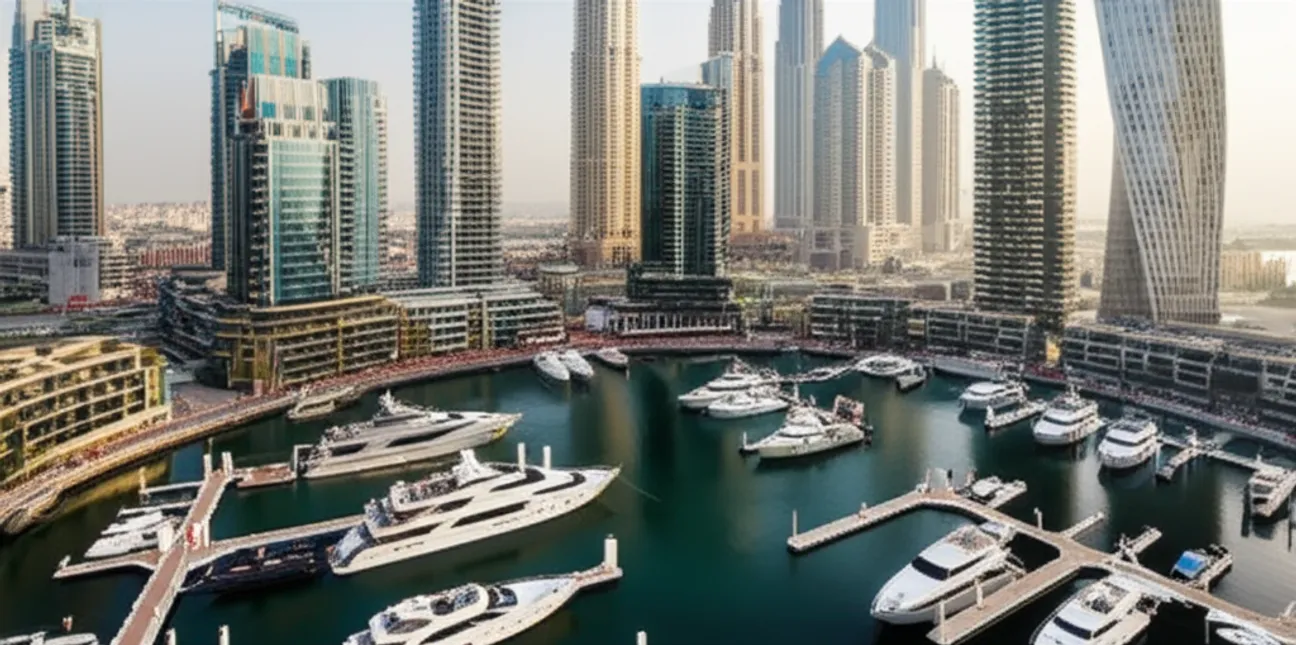
Several names illustrate the pattern. Abdulla Bin Habtoor serves as CEO of Shamal Holding, a diversified investment firm that positions itself as a "curator of real estate" in Dubai (Source: Shamal Holding / GRI Institute, 2025). Shamal Holding should be distinguished from the broader Al Habtoor Group led by Khalaf Al Habtoor; it operates as a distinct, sovereign-aligned investment vehicle. Its direct real estate portfolio includes Dubai Harbour, a major seafront district encompassing the region's largest marina and cruise terminal (Source: Shamal Holding Official Portfolio, 2024–2025). The scale and complexity of that asset — part infrastructure, part hospitality, part residential — reflects a family office operating with the sophistication and risk appetite of an institutional developer.
In Saudi Arabia, Abdulaziz Al Bassam leads AIMS Investment (AIMS Holding), a family office with a dedicated real estate arm (Source: AIMS Holding / GFH Financial Group, 2025). AIMS executes direct international real estate transactions, as evidenced by its 2024 sale of a Manchester residential portfolio (Source: Place North West, June 2024). The cross-border nature of that deal underscores a critical trend: GCC family offices are not confining direct investment to home markets. They are building pipelines that span the Gulf, Western Europe, and beyond.
Meanwhile, Adib Mattar, formerly Head of Private Equity at Mubadala, now co-heads a luxury real estate and hospitality fund (Source: GRI Institute / Mubadala Press Releases, 2025). Mattar's trajectory — from sovereign wealth to family-scale capital — exemplifies the talent migration fueling the direct investment shift. Senior professionals trained at sovereign funds carry institutional discipline, due diligence frameworks, and network access into leaner, faster-moving family vehicles.
GCC family offices are no longer allocating to real estate through intermediaries alone — they are building direct investment platforms that rival institutional capabilities. This represents a fundamental reordering of how private capital enters the Gulf's property markets.
Why Is the Regulatory Environment Accelerating Direct Family Office Investment?
Three regulatory developments are lowering friction for family offices operating as direct real estate investors across the GCC.
First, the DIFC Family Arrangements Regulations 2024 replaced the previous Single Family Office regime. The updated framework removes the requirement for SFOs serving only one family to register as Designated Non-Financial Businesses or Professions (DNFBPs), enhancing privacy and reducing administrative burden (Source: DIFC / Private Banker International, April 2024). This change directly addresses a longstanding concern among Gulf families: discretion. By simplifying the regulatory architecture, DIFC has attracted a significant surge in SFO registrations, concentrating family capital infrastructure in Dubai.
Second, UAE Federal Decree-Law No. 47 of 2022 received a critical public clarification (CTP008) in September 2025 confirming that Family Foundations can be treated as "fiscally transparent" for Corporate Tax purposes. In practical terms, income generated by real estate assets — such as rental yields from hospitality or residential portfolios — is taxed only at the beneficiary level, not the entity level (Source: UAE Federal Tax Authority, September 2025). For family offices holding direct real estate, this clarification eliminates a layer of tax inefficiency that previously incentivized indirect fund structures.
Third, Saudi Arabia's new Investment Law (Royal Decree No. M/19), with implementing regulations effective in February 2025, equalizes treatment of local and foreign investors and streamlines license registration. The reform facilitates direct real estate ownership for foreign family offices — a significant development as Riyadh competes with Dubai for family office domicile (Source: Saudi Arabia Investment Law Implementing Regulations, 2025).
Taken together, these three regulatory shifts create a permissive architecture for family offices to hold real estate assets directly, without the layering costs, governance overhead, and disclosure requirements associated with fund vehicles.
From Indirect to Direct: What Is Driving the Allocation Shift?
The move toward direct investment is not merely a regulatory story. It reflects deeper structural forces.
Generational transition is perhaps the most significant driver. Younger principals such as Abdulla Bin Habtoor and Abdulaziz Al Bassam bring international education, institutional training, and comfort with operational complexity. They are less inclined to delegate capital to external managers and more inclined to build in-house teams capable of sourcing, underwriting, and managing real estate assets.
Middle East family offices are projected to increase allocations to direct real estate, according to Certuity's 2025 Family Office Investment Insights report. The projection aligns with a broader industry consensus, discussed at recent GRI Institute events, that the GCC real estate market is transitioning from "pure development" to "investment-driven" cycles, with hospitality and branded residences emerging as key value drivers (Source: King & Spalding, 2026 Outlook).
The convergence of regulatory reform, generational change, and market maturation is creating conditions for family offices to become the dominant source of discretionary capital in GCC real estate over the next cycle.
Private credit is also emerging as a core channel for real estate funding in the region, with Saudi Arabia and the UAE positioned as the centers of transition for institutional capital (Source: King & Spalding, 2026 Outlook). Family offices with direct investment mandates are natural participants in this evolution — they can move faster than sovereign funds, accept tailored risk-return profiles, and deploy across the capital stack from equity to mezzanine.
Inbound Capital: The Global Family Office Dimension
The GCC's family office ecosystem is not exclusively domestic. Search data and member engagement patterns tracked by GRI Institute reveal interest from international family offices in Gulf real estate opportunities. LP Administradora de Bens Ltda (LP Bens), a Brazilian family office managing the assets of the Fares family — owners of Lojas Marabaz — appears in GRI's analytics in a GCC context (Source: GRI Institute / SiiLA Market Analytics, 2025). While LP Bens is not a GCC-origin entity, its presence in the data points to a growing pattern: Latin American, European, and Asian family offices are evaluating Gulf real estate as a diversification play, drawn by yield compression in home markets and the maturation of Dubai and Riyadh as institutional-grade investment destinations.
This inbound flow adds competitive pressure and liquidity to GCC real estate markets. It also creates co-investment opportunities for local family offices seeking to syndicate larger transactions — particularly in hospitality and branded residence segments where capital requirements often exceed individual family balance sheets.
Sector Preferences: Hospitality, Branded Residences, and Mixed-Use
The asset-class preferences of GCC family offices skew heavily toward hospitality and branded residences. Shamal Holding's Dubai Harbour portfolio — integrating a marina, cruise terminal, and residential components — is emblematic of the mixed-use, experiential assets that family offices favor. These are complex, management-intensive investments that reward the patient, long-term capital that family offices can provide.
Industry analysis from King & Spalding projects that the GCC market's shift toward investment-driven cycles will position hospitality and branded residences as key value drivers through 2026 and beyond. For family offices with operational capability, these sectors offer both yield and brand-building opportunities that purely financial investors cannot easily replicate.
Outlook
The GCC family office landscape is undergoing a structural transformation. Regulatory reforms in the UAE and Saudi Arabia have removed barriers. A new generation of principals is professionalizing investment operations. And market conditions — characterized by deepening institutional infrastructure, rising international interest, and the transition from development to investment cycles — favor direct allocators.
For real estate operators, developers, and fund managers across the Gulf, family offices are no longer a supplementary capital source. They are becoming principals at the table — with the mandate, the infrastructure, and the ambition to shape markets directly. GRI Institute continues to track this capital class through its GCC events and member network, where many of these principals convene to originate transactions and build cross-border partnerships.