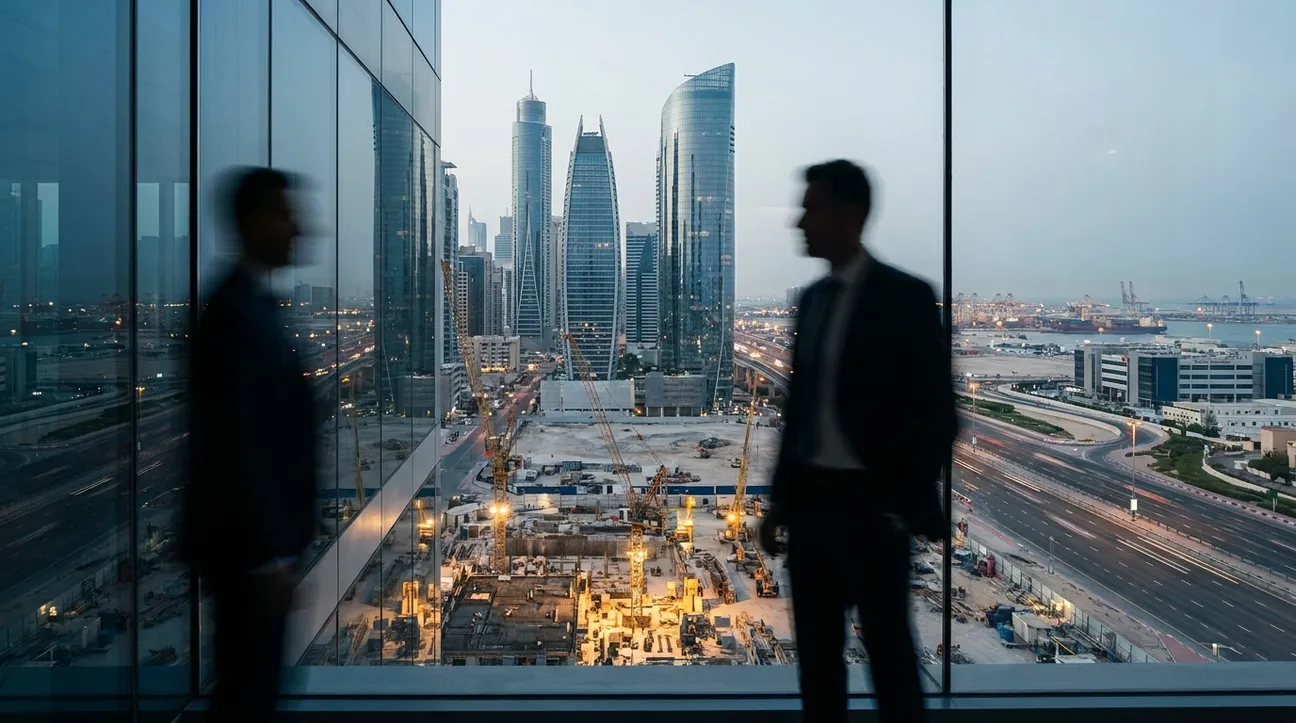
Design-tech entrepreneurs are reshaping Dubai's ultra-luxury real estate, and the old playbook is fading
As Omniyat scales toward AED 100 billion and Damac Capital manages $10 billion in assets, a new breed of vertically integrated developers is rewriting the competitive logic of Gulf luxury property.
Executive Summary
Key Takeaways
- A new breed of vertically integrated "design-tech" developers is displacing the traditional luxury playbook of licensing brands and outsourcing management.
- Omniyat recorded $5.4B in 2025 sales and targets an AED 100B portfolio within five years; Damac Capital manages an estimated $10B in assets.
- Dubai's New Real Estate Funds Law (AED 50M minimum capital, dual regulatory oversight) creates a regulated pathway for institutional fund structures beyond traditional presales.
- Savills' $1.1B acquisition of Eastdil Secured will deepen global institutional capital flows into Gulf luxury assets.
- Competitive advantage increasingly hinges on proprietary technology platforms, not just design or land banks.
The competitive architecture of Dubai's ultra-luxury segment is shifting
Dubai's ultra-luxury real estate market has entered a phase of structural transformation. The developers gaining ground are those who treat technology, branded hospitality, and vertically integrated operations as inseparable components of a single platform, rather than as separate business lines bolted together. This convergence is producing a new competitive architecture in which design-led vision, proprietary technology stacks, and capital market sophistication determine which operators capture the highest-value segments of the market.
The scale of the opportunity is already visible in the numbers. Omniyat, led by Mahdi Amjad, recorded total sales of $5.4 billion in 2025, with a gross development value of $11.7 billion, according to Forbes. The company aims to expand its total portfolio to AED 100 billion over the next five years, with AED 50 billion dedicated to new ventures across residential, commercial, and mixed-use developments. Meanwhile, Damac Capital, the investment arm of the Damac Group founded by Hussain Sajwani, holds an estimated assets under management of $10 billion, according to Altss. These figures reflect a market in which capital allocation, brand equity, and operational control are converging at unprecedented scale.
The question facing the sector is whether the next wave of growth will be captured by incumbents scaling proven models or by a new generation of design-tech entrepreneurs who build development platforms from the ground up, integrating hospitality technology, branded residential concepts, and institutional capital formation into a single operating system.
What distinguishes a design-tech development platform from a traditional luxury developer?
Traditional luxury development in Dubai has followed a well-understood formula: acquire prime land, commission a signature architect, secure a hospitality brand license, and sell units at a premium. The model works. Omniyat's trajectory to $5.4 billion in annual sales demonstrates its effectiveness when executed with discipline and taste.
The design-tech model introduces a different logic. Instead of licensing external brands, the operator creates proprietary branded concepts and controls the entire guest and resident experience through technology. Instead of outsourcing property management, the developer builds or acquires hospitality management capabilities. Instead of relying on traditional brokerage for capital formation, the platform integrates investment vehicles and digital distribution channels.
This vertical integration produces several competitive advantages. First, it captures margin across the full value chain, from development to operations to asset management. Second, it creates proprietary data on guest and resident behavior, enabling continuous product refinement. Third, it builds brand equity that belongs to the developer rather than to a licensed hotel operator, which compounds in value over time.
Several operators in Dubai are pursuing variations of this model, blending hospitality, technology, and development into unified platforms. The common thread is a founder-led vision that treats the building as a technology-enabled service platform rather than a static physical asset. These entrepreneurs recognize that in the ultra-luxury segment, the experience layer, what happens inside and around the building, generates more long-term value than the physical structure itself.
GRI Institute members active in Gulf real estate have observed this shift firsthand. In conversations across GRI events focused on the GCC market, senior executives consistently note that the most competitive new entrants are those who combine deep technology capability with design ambition, creating products that legacy developers struggle to replicate.
How is the institutional capital landscape evolving to support these new platforms?
The maturation of Dubai's capital markets infrastructure is creating conditions that favor platform-style developers. The Savills agreement to acquire Eastdil Secured, valued at an enterprise value of $1.1125 billion according to the New York Real Estate Journal, signals the globalization of institutional real estate advisory. Eastdil Secured operates a Dubai office, and its integration into the Savills network will bring deeper institutional capital market capabilities to the Gulf region.
For design-tech developers, this evolution matters. Platform operators who can demonstrate stable cash flows from hospitality operations, strong brand equity, and scalable management systems become attractive to institutional investors seeking exposure to Gulf real estate through structured vehicles rather than direct unit purchases.
Dubai's regulatory framework is also adapting. The New Real Estate Funds Law sets a minimum fund capital of AED 50 million and assigns dual oversight to the Dubai Financial Services Authority and the Real Estate Regulatory Agency for collective investment vehicles holding UAE property assets. This framework creates a regulated pathway for developers to raise capital through fund structures, moving beyond the traditional presale model that has dominated Dubai's market.
Simultaneously, the Federal Decree-Law No. (25) of 2025, the New Civil Code that replaced the 1985 Civil Code and came into force on June 1, 2026, introduces a duty to negotiate in good faith, obligations to disclose information, and liability for misuse of confidential information during negotiations. These provisions strengthen the legal infrastructure for complex transactions, including joint ventures between developers and institutional capital partners, by establishing clearer standards of conduct.
The convergence of global advisory capability, regulated fund structures, and modernized civil law creates an environment in which design-tech platforms can access deeper pools of capital than their predecessors. Developers who build transparent, institutionally oriented operating platforms will find it easier to attract sovereign wealth funds, family offices, and global real estate private equity firms.
The competitive map: incumbents, challengers, and the technology variable
Dubai's ultra-luxury segment is becoming a three-tier market. At the top sit established operators like Omniyat, whose portfolio ambitions and sales performance set the benchmark for design-led luxury. Mahdi Amjad's vision of expanding to AED 100 billion in total portfolio value represents a scale play that combines iconic architecture with curated residential experiences.
In the second tier, diversified conglomerates like the Damac Group deploy capital across multiple asset classes and geographies, leveraging brand recognition and financial firepower. Hussain Sajwani's Damac Capital, with $10 billion in estimated AUM, exemplifies the institutional heft that established players bring to the market.
The third tier, and the most dynamic, comprises the design-tech entrepreneurs. These operators are smaller in scale but disproportionately influential in shaping market expectations. They compete on experience innovation, technology integration, and brand originality rather than on land bank size or capital reserves. Their projects often become reference points that redefine what ultra-luxury means in a given submarket.
The technology variable is what separates this emerging tier from previous cycles of entrepreneurial development in Dubai. Earlier generations of boutique developers competed primarily on design and location. Today's design-tech entrepreneurs compete on operating systems: the integrated technology platforms that manage everything from energy optimization and guest services to dynamic pricing and community engagement.
This shift has implications for how industry leaders evaluate competitive positioning. The traditional metrics of gross development value and total sales remain important, but they are increasingly supplemented by technology-driven indicators such as guest engagement scores, operational efficiency ratios, and brand loyalty metrics. Developers who can demonstrate excellence across both physical and digital dimensions will command premium valuations.
What should industry leaders watch in the next 18 months?
Three developments will shape the trajectory of Dubai's design-tech luxury segment. First, the implementation of the New Real Estate Funds Law will reveal how many developers can meet the AED 50 million minimum capital threshold and satisfy dual regulatory oversight. The developers who launch compliant funds first will gain a structural advantage in institutional capital formation.
Second, the integration of Eastdil Secured into the Savills platform will test whether global institutional advisory models can accelerate capital flows into Gulf luxury assets. If the combined platform successfully connects Gulf developers with global institutional investors, it will validate the design-tech model's appeal to sophisticated capital.
Third, the competitive response from incumbents will matter. Omniyat's five-year expansion plan and Damac Capital's growing AUM suggest that established players are investing in their own platform capabilities. The question is whether they will build or acquire technology and branded hospitality capabilities to match the integrated models emerging from the challenger tier.
GRI Institute continues to track these dynamics through its GCC-focused research and member engagement. The institute's convening role in bringing together developers, investors, and operators across the Gulf region provides a unique vantage point on how competitive strategies are evolving in real time.
Dubai's ultra-luxury real estate market has always rewarded boldness and vision. The current cycle adds a new requirement: technological sophistication. The developers who master the integration of design, technology, and institutional capital will define the next era of Gulf luxury real estate. Those who treat these as separate capabilities rather than as components of a unified platform risk falling behind in a market that increasingly rewards convergence.