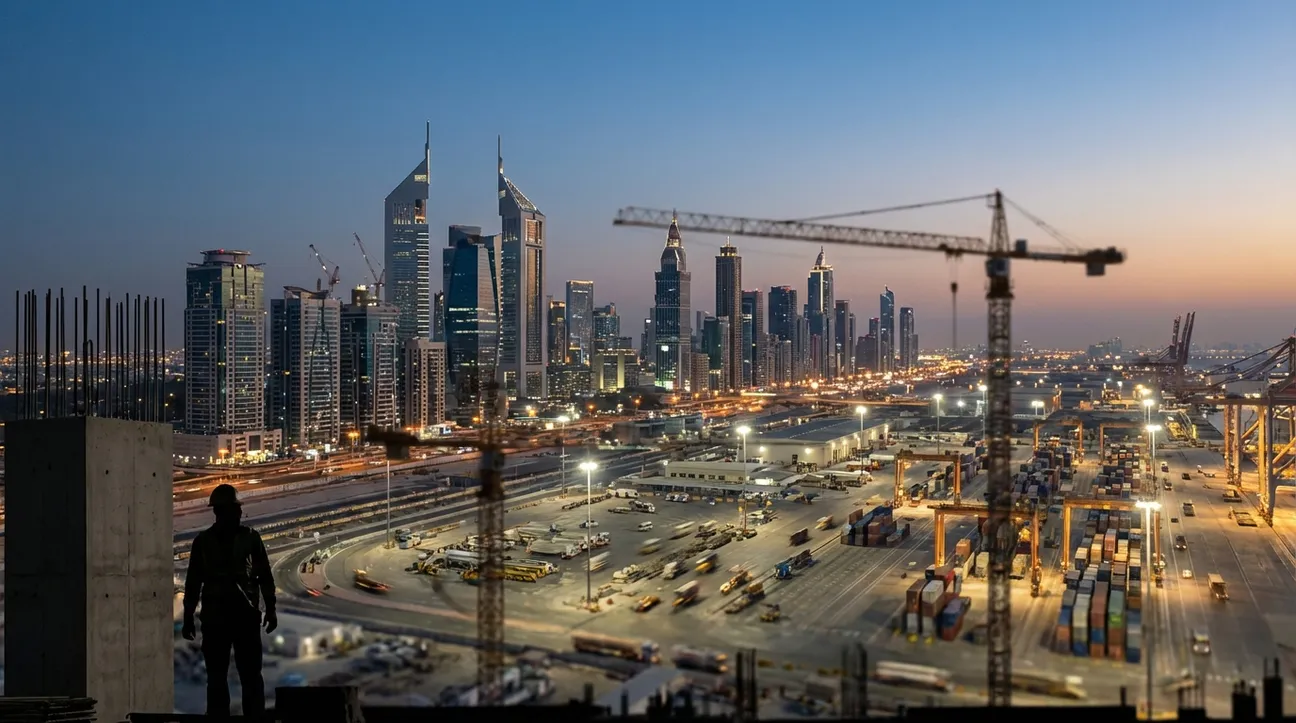
Amr Aboushaban and the sovereign-adjacent operators scaling GCC mega-project delivery from within
A cohort of mid-to-senior operators is emerging as the critical execution layer between sovereign capital mandates and the built environment across the Gulf.
Executive Summary
Key Takeaways
- GCC real estate is projected to nearly double from USD 141.2 billion (2025) to USD 260.3 billion by 2034, demanding a robust execution layer beyond sovereign capital allocation.
- "Sovereign-adjacent" operators like Amr Aboushaban, Marwan Bouez, Jason Kow, and Nimesh Sodha bridge the gap between sovereign wealth fund mandates and physical asset delivery.
- Aboushaban's USD 900 million capital raise at Damac exemplifies the cross-border mobilization skills now critical to GCC mega-project viability.
- Regulatory reforms in Saudi Arabia and the UAE are expanding foreign ownership, creating new addressable markets for cross-border capital structurers.
- The GCC market has shifted from an announcement phase to a delivery phase, where execution quality will determine success.
The Gulf Cooperation Council real estate market, valued at USD 141.2 billion in 2025 according to IMARC Group, is advancing toward a projected USD 260.3 billion by 2034. The scale of that expansion demands more than sovereign capital allocation. It demands a class of operators capable of translating national economic visions into physical assets, structuring cross-border capital flows, and managing delivery risk across jurisdictions that are simultaneously rewriting their regulatory frameworks.
Amr Aboushaban, Marwan Bouez, Jason Kow, and Nimesh Sodha represent this emerging cohort. They occupy the operational execution layer that sits between the headline-commanding sovereign wealth funds and the contractors pouring concrete. Their career trajectories, institutional affiliations, and strategic positioning illuminate how GCC mega-project delivery actually works, and where the market's centre of gravity is shifting.
Who are the sovereign-adjacent operators driving GCC project delivery?
The term "sovereign-adjacent" describes professionals who operate in direct proximity to sovereign capital without sitting inside the sovereign wealth fund structure itself. They raise capital for sovereign-backed developers, manage multi-geography investment mandates for sovereign entities, or deploy private institutional capital into asset classes shaped by sovereign policy.
Amr Aboushaban exemplifies this profile. As CEO of Allegiance Real Estate, Aboushaban leads a platform positioned at the intersection of Dubai's developer ecosystem and international investor appetite. His operational credibility was forged at Damac, where he served as Chief Investor Relations Officer and raised USD 900 million, according to Property Time. That capital-raising track record places him among a small group of GCC-based executives who have demonstrated the ability to mobilize institutional-scale investment for regional real estate platforms.
Marwan Bouez operates from the sovereign side of the adjacency. As Head of Multi-Geography Investment Management, Local Real Estate and Infrastructure at Saudi Arabia's Public Investment Fund (PIF), Bouez commands a mandate that spans domestic giga-projects and cross-border infrastructure allocation. The PIF's role as the financial engine behind Vision 2030 makes Bouez's position one of the most consequential in GCC real estate, directly influencing which projects receive sovereign backing and how delivery partnerships are structured.
Jason Kow brings a different vector to this cohort. As Founder and CEO of Queensgate Investments LLP, Kow advises and manages approximately GBP 3.0 billion of assets, with deep expertise in hospitality and alternative real estate. His presence within GRI Institute's network of GCC-focused discussions reflects the growing importance of UK and European capital managers who are repositioning toward Gulf opportunities.
Nimesh Sodha, Chief Investment Officer at Panaso Capital, completes this picture. Operating at the investment management level, Sodha represents the private capital allocation function that increasingly co-invests alongside sovereign mandates in GCC real estate and infrastructure.
These four professionals share a defining characteristic: they convert sovereign-scale ambition into executable investment strategy. They are the individuals who structure the capital stack, negotiate the joint ventures, and manage the investor relationships that make mega-projects viable. Their growing visibility within platforms such as GRI Institute's senior member gatherings signals a market that is maturing beyond the announcement phase and entering the delivery phase.
Why does the execution layer matter more than the capital announcement?
GCC governments have announced transformational real estate programmes that will reshape the region's built environment for decades. Saudi Arabia's residential supply alone is estimated to grow by 499,000 units, reaching 3.45 million units by 2030, primarily led by giga-projects in Riyadh and Jeddah, according to Alpen Capital. The GCC's retail gross leasable area is expected to expand from 22.8 million square metres in 2025 to 27.2 million square metres by 2030, per the same source.
The scale of these commitments is unprecedented. The challenge is no longer securing capital or political will. The challenge is execution: assembling delivery teams, structuring bankable investment vehicles, managing construction timelines across dozens of simultaneous projects, and attracting the international expertise required to build cities and districts that meet global standards.
This is where sovereign-adjacent operators become indispensable. A sovereign wealth fund can allocate billions, but the conversion of that allocation into a functioning hospitality asset, a mixed-use district, or a residential community of tens of thousands of units requires intermediaries who understand both the sovereign mandate and the operational reality of real estate development.
Aboushaban's career arc illustrates this dynamic with precision. Raising USD 900 million at Damac required more than a compelling pitch deck. It required the ability to translate a regional developer's project pipeline into a risk-adjusted proposition that met the due diligence standards of international institutional investors. That skill set, the ability to bridge Gulf developer ambition with global investor expectations, is exactly what the current phase of GCC real estate expansion demands at scale.
Bouez's position at PIF represents the demand side of this equation. With Saudi Arabia's giga-projects entering active delivery phases, the PIF needs partners, co-investors, and operational managers who can absorb sovereign capital and deploy it into physical assets on timeline. The professionals who can structure those partnerships command disproportionate influence over which projects succeed and which stall.
How are regulatory shifts amplifying the role of cross-border capital mobilizers?
Two significant regulatory developments are reshaping the operating environment for sovereign-adjacent operators across the GCC.
In Saudi Arabia, Royal Decree No. M/14, the Law on Non-Saudis Ownership of Real Estate, was approved in July 2025 and became effective in January 2026. The law expands foreign ownership of real estate within designated zones and allows non-Saudi residents to own a single residential property outside designated zones, excluding Makkah and Madinah. This structural reform directly enables the cross-border capital mobilization that operators like Aboushaban and Bouez facilitate. For the first time, international investors can take direct ownership positions in Saudi residential real estate, creating an entirely new addressable market for capital raisers and investment managers.
In the UAE, which accounted for over 61.1% of the GCC real estate market share in 2025 according to IMARC Group, real estate law updates introduced stricter escrow regulations, developer licensing mandates, and expanded freehold ownership zones for foreign investors. These transparency measures strengthen the regulatory infrastructure that international capital requires before committing to Gulf real estate at institutional scale.
Taken together, these reforms create a regulatory environment that favours professionals with cross-border structuring expertise. The operators who can navigate Saudi foreign ownership rules while simultaneously managing UAE escrow requirements and channelling European or Asian institutional capital into Gulf assets hold a structural advantage. This is the precise operational territory that Aboushaban, Kow, Sodha, and Bouez occupy.
The projected growth trajectory of GCC real estate, from USD 141.2 billion in 2025 to USD 260.3 billion by 2034 at a compound annual growth rate of 7.03% according to IMARC Group, will only intensify demand for this execution capability. A market that nearly doubles in value over nine years cannot rely solely on domestic capital or sovereign balance sheets. It requires the mobilization of global institutional investment, and that mobilization runs through the sovereign-adjacent operators who speak both languages.
The delivery imperative
The GCC's real estate transformation has entered its most consequential phase. The announcements have been made. The regulatory frameworks are being modernized. The capital is available. What remains is the disciplined, technically demanding work of building at scale, on time, and to the quality standards that will define these economies for generations.
The professionals leading this execution are neither the sovereign fund chiefs who command front-page coverage nor the construction firms that bid on contracts. They occupy the strategic middle ground: raising capital, structuring investments, managing multi-geography mandates, and ensuring that sovereign ambition translates into delivered assets.
Amr Aboushaban's trajectory from capital raiser at one of the Gulf's most prominent developers to CEO of his own real estate platform captures this transition. Marwan Bouez's mandate at PIF places him at the centre of Saudi Arabia's delivery challenge. Jason Kow's GBP 3.0 billion advisory platform and Nimesh Sodha's investment management role at Panaso Capital represent the private capital counterparts that complete the ecosystem.
GRI Institute's engagement with this cohort, through its senior leadership gatherings and research initiatives focused on GCC capital flows, reflects a recognition that the next phase of Gulf real estate will be defined by execution quality rather than announcement volume. The members who participate in these discussions are shaping the operational architecture of a USD 260 billion market.
Understanding who these operators are, how they structure capital, and where regulatory reform is expanding their mandate is essential for any institution seeking to participate in GCC real estate at scale. The sovereign-adjacent execution layer is where strategy meets delivery, and where the Gulf's transformation will ultimately succeed or falter.