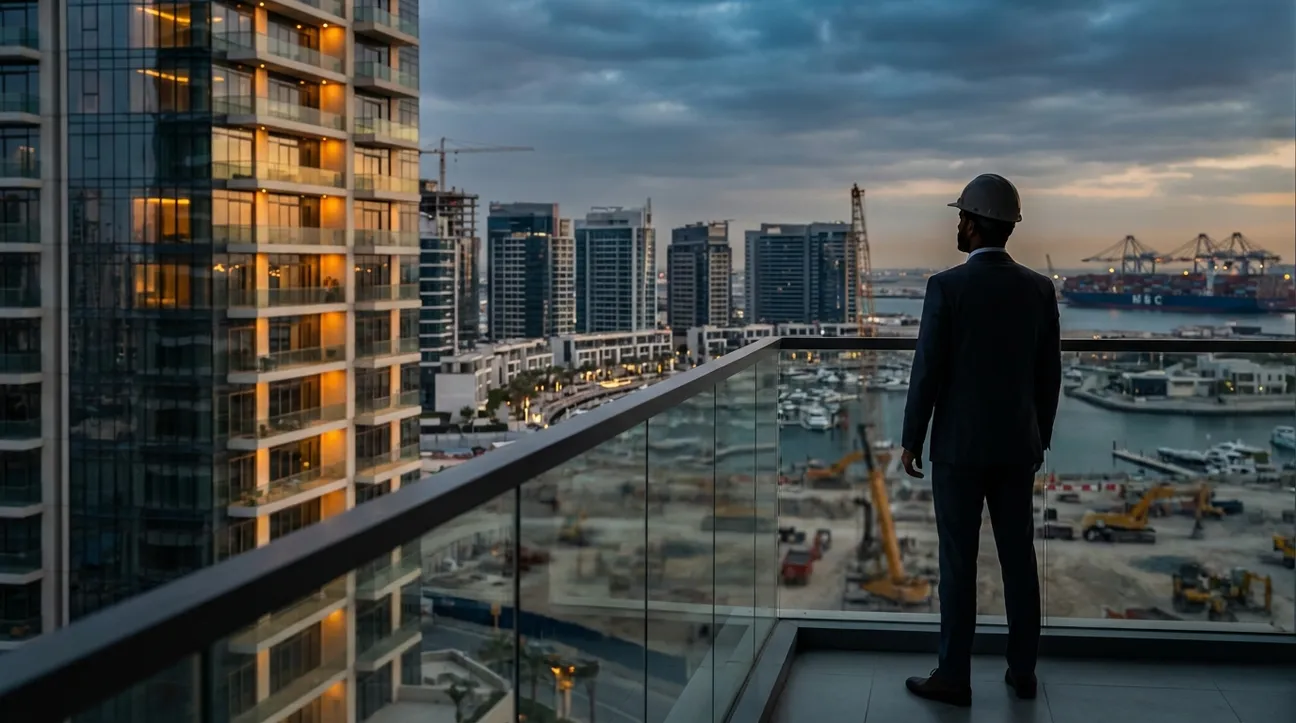
Abdulaziz Al Bassam and the new generation of Saudi principals deploying directly into GCC real estate
Family offices across the Gulf are bypassing fund intermediaries to invest at scale in branded residences and hospitality assets.
Executive Summary
Key Takeaways
- GCC family offices manage over $200 billion in assets, with 15% allocated to real estate versus the 10% global average.
- Saudi and Emirati principals like Abdulaziz Albassam, Abdulla Bin Habtoor, and Adil Taqi are bypassing fund intermediaries to invest directly in branded residences and hospitality assets.
- The GCC real estate market is projected to nearly double from $141.2 billion in 2025 to $260.3 billion by 2034.
- The Middle East hotel pipeline hit an all-time high of 650 projects.
- Direct deployment compresses intermediation costs and brings patient, long-duration capital to the market.
GCC family offices now manage more than $200 billion in assets, according to The Arab Today, and a growing share of that capital is flowing directly into real estate without the intermediation of institutional funds. At the center of this shift stands a cohort of Saudi and Emirati principals, including Abdulaziz Albassam, Abdulla Bin Habtoor, and Adil Taqi, who are redefining how private wealth intersects with physical assets across the Gulf Cooperation Council.
The GCC real estate market reached a valuation of USD 141.2 billion in 2025, according to data from IMARC Group cited by GRI Institute. It is projected to reach USD 260.3 billion by 2034, growing at a compound annual growth rate of 7.03%. Within that trajectory, the direct deployment model championed by principal investors represents a structural evolution in how capital is allocated, underwritten, and governed.
Who are the Saudi principals reshaping GCC real estate capital flows?
Abdulaziz Albassam serves as CEO of AIMS Investment and Chief Investment Officer of Aljomaih Holding Co., one of Saudi Arabia's most established family conglomerates. His positioning illustrates a broader pattern: Gulf-born capital allocators who operate with institutional discipline but retain the agility and conviction of principal investors. Rather than channeling capital through third-party fund managers, figures like Albassam are building vertically integrated platforms that source, structure, and manage real estate assets directly.
Abdulla Bin Habtoor, CEO of Shamal Holding, occupies a similar space on the Emirati side of the equation. Shamal Holding has built a portfolio anchored in branded residences and hospitality-linked developments, asset classes that demand both operational sophistication and long-duration capital. Adil Taqi, Group CEO at OMNIYAT Group, further exemplifies this professionalization of cross-border capital flows within the GCC, with a focus on premium positioning and design-led development.
These principals occupy a distinct mid-tier segment between sovereign-backed mega-developers and speculative operators. Their investment thesis typically centers on branded residences and hospitality assets, categories where brand affiliation creates pricing power and where direct ownership allows tighter control over development quality, tenant mix, and exit timing.
Middle East family offices allocate 15% of their portfolios to real estate, compared to the global average of 10%, according to the UBS Global Family Office Report 2024, as cited by the CFA Institute. That 500-basis-point premium reflects the region's deep cultural and commercial affinity with property as a store of value, but also the growing sophistication with which Gulf families approach the asset class.
How large is the Saudi family office ecosystem driving direct real estate investment?
The Saudi family office market was valued at approximately USD 199 million in 2025, according to PA Global, with projections indicating growth to USD 282 million by 2034. While these figures capture the advisory and service infrastructure around family offices rather than the total assets deployed, they signal a maturing ecosystem that is building the institutional scaffolding necessary for direct investment at scale.
Saudi Arabia's new foreign ownership law reinforces the institutional framework enabling cross-border capital flows into real estate. For Saudi principals seeking to deploy across the GCC, this regulatory modernization complements domestic Vision 2030 reforms and creates a more transparent legal environment for structuring direct holdings in multiple jurisdictions.
The distinction between sovereign wealth and family principal capital is critical for market participants seeking to understand deal dynamics in the region. Sovereign entities such as the Public Investment Fund operate with mandate-driven allocation strategies and political economy considerations. Family principals, by contrast, deploy with faster decision cycles, concentrated conviction, and a willingness to take development risk in exchange for operational control.
GRI Institute has consistently tracked this bifurcation in its regional programming, where discussions among senior leaders in Gulf real estate increasingly distinguish between capital sources not only by size but by governance structure, return expectations, and time horizon.
Transaction momentum across key GCC markets
The macroeconomic backdrop for direct deployment remains robust. Dubai real estate transaction values surged 28.3% year-on-year in early 2025, according to GRI Institute data. Abu Dhabi real estate sales jumped 75.8% over the same period, reflecting intensifying demand across both established and emerging submarkets in the UAE.
The Middle East hotel pipeline hit an all-time high of 650 projects, according to GRI Institute, underscoring the scale of opportunity in hospitality-linked real estate, precisely the asset class where Saudi and Emirati principals are concentrating capital. Branded residences sit at the intersection of residential premium and hospitality operational expertise, making them a natural vehicle for principals who seek both yield and brand equity appreciation.
The introduction of a federal corporate tax in the UAE at a headline rate of 9% is recalibrating underwriting standards for real estate private credit and equity returns. For direct investors, the tax introduces a new variable in jurisdictional arbitrage within the GCC, potentially influencing how Saudi principals allocate between domestic opportunities under Vision 2030 and cross-border plays in Dubai, Abu Dhabi, or Doha.
Why the shift from fund intermediation to direct deployment matters
The migration from indirect fund allocations to direct real estate investments carries structural implications for the GCC property market. When principals deploy directly, they alter liquidity dynamics, compress intermediation costs, and bring long-duration patient capital to asset classes that historically relied on shorter-cycle fund vehicles.
Direct deployment also reshapes counterparty relationships. Developers, operators, and brand licensors increasingly negotiate with principals who combine capital commitment with strategic intent, often seeking board-level involvement or co-development structures that traditional limited partners would not pursue.
For the broader market, the presence of sophisticated direct investors such as Abdulaziz Albassam, Abdulla Bin Habtoor, and Adil Taqi serves as an institutional quality signal. Their willingness to commit principal capital to a project or platform provides validation that attracts co-investors, lenders, and operating partners, effectively catalyzing larger pools of capital around a single deal.
This dynamic is particularly visible in the branded residence segment, where a principal investor's direct involvement often precedes the entry of international hospitality brands. The principal takes development risk and establishes the asset's positioning before brand operators commit their flag, a sequencing pattern that has become characteristic of the GCC's premium residential pipeline.
What distinguishes the Saudi direct investment model from the Emirati approach?
While granular comparative data on geographic allocation between Saudi and Emirati family principals remains limited, the structural differences are observable. Saudi principals are operating within a domestic market undergoing unprecedented regulatory and physical transformation under Vision 2030, which creates a deep pipeline of domestic opportunities in hospitality, mixed-use, and tourism-linked real estate.
Emirati principals, by contrast, deploy into a more mature market with established transaction infrastructure, deeper secondary liquidity, and a longer track record of international brand partnerships. The 28.3% surge in Dubai transaction values and 75.8% jump in Abu Dhabi sales volumes demonstrate the absorptive capacity of UAE markets for both domestic and cross-border capital.
The convergence of these two models is where the most significant deal flow is likely to emerge. Saudi principals with domestic development expertise are increasingly active in UAE markets, while Emirati principals are exploring Saudi Arabia's opening economy. This cross-pollination creates opportunities for joint ventures, co-investment platforms, and shared brand relationships that did not exist a decade ago.
GRI Institute members operating across the GCC have noted this convergence in recent leadership gatherings, where the composition of deal tables increasingly reflects cross-border principal partnerships rather than single-jurisdiction mandates.
Market outlook and capital allocation trajectory
The trajectory from USD 141.2 billion in 2025 to a projected USD 260.3 billion by 2034 represents a near-doubling of the GCC real estate market over nine years. Within that growth, the share captured by direct principal investors is poised to expand as family office infrastructure matures, regulatory frameworks modernize, and asset-class specialization deepens.
The all-time high of 650 hotel projects in the Middle East pipeline provides a tangible measure of the deployment runway available to principals focused on hospitality-linked assets. For investors like Abdulaziz Albassam at AIMS Investment and Aljomaih Holding, Abdulla Bin Habtoor at Shamal Holding, and Adil Taqi at OMNIYAT Group, the scale of this pipeline translates into a multi-year opportunity set that rewards patient, operationally engaged capital.
As GCC real estate evolves from a market defined by sovereign-scale mega-projects to one shaped equally by sophisticated principal investors, the allocation decisions made by this new generation of leaders will determine not only returns but the institutional character of the region's built environment for decades to come.