 Maebh Studio OPC
 Dispute resolution in infra – Arbitration the way forward?
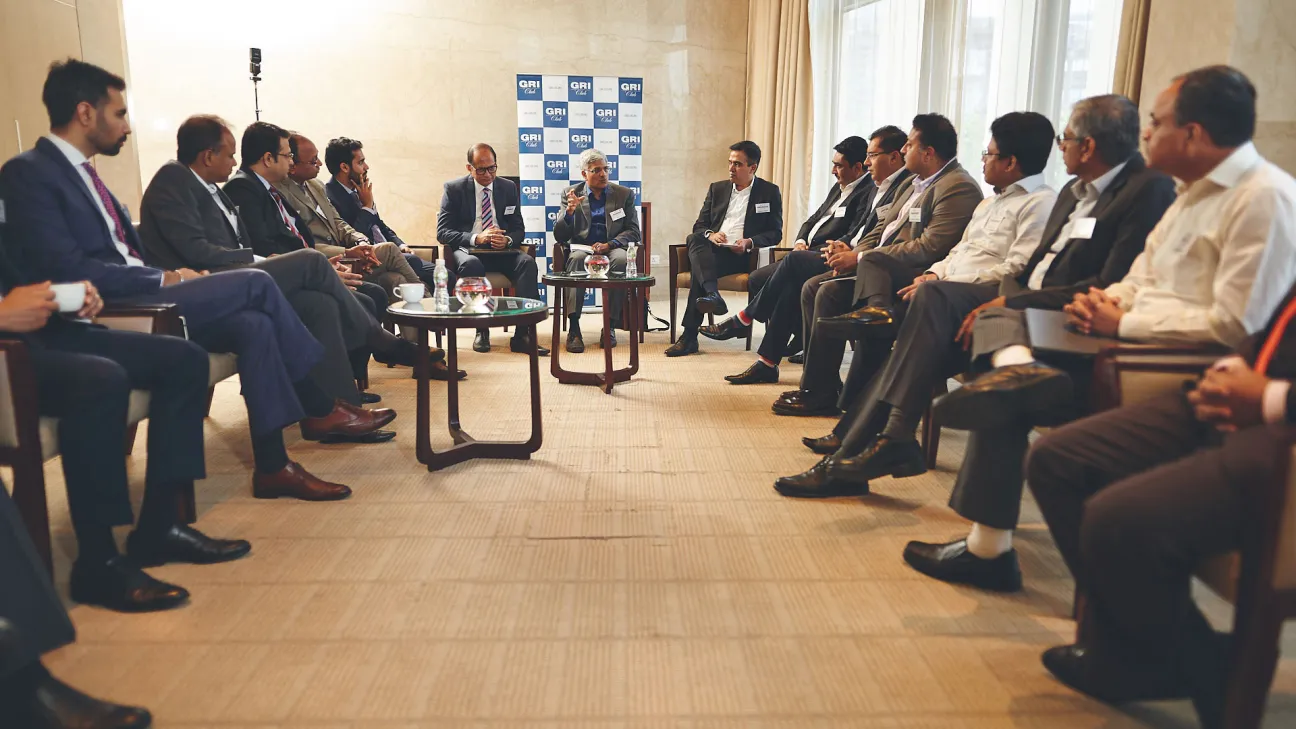
GRI Club Infra India hosted a club meeting debating dispute resolution and arbitration within Indian Infrastructure.
On October 4, GRI Club Infra India hosted a club meeting to address the most pressing issues related to dispute resolution and arbitration in the country. Manish Agarwal, Partner at PwC moderated the lively discussion and GRI Club members actively participated in addressing the various challenges facing the sector.
When weighing up the pros and cons of institutional arbitration, members saw an increasingly significant amount of professionalism creeping into the sector and viewed it as a progressive measure against traditional ad hoc arbitration. Such merits of this could be seen in amendments to the ACT and Niti Aayog laws that were leading to a faster closure of long open contracts. However, members unanimously believed that there could be no ‘one size fits all’ solution to simplifying and standardising arbitration policies.
It was pointed out that were continuing challenges within the long term nature of contracts that were affecting competitive biddings. Most were anxious of how this might contribute to the appetite for investors, developers and contractors to commit to large scale projects. On this point, many felt that subscribing value to the disputes being raised was extremely critical in the Indian environment, many were not considering the risks involved. Investors felt the return on investment was low, considering the time taken and volatile market. As over estimation will not lead to realisation at the end of the term.
PPP arbitrations
The environment and policy regarding PPP arbitrations was a hotly contested topic.On the issues of what can work for PPP arbitrations, most felt it should be avoided altogether, as time and resources are precious. It was agreed that arbitration as a dispute mechanism works more for the construction sectors, because it has less tricky time consuming characteristics than infra style PPP products. Of course, it was noted that most infra contracts in India are still not yet robust enough despite recent law changes and government incentivisation. Until there is a consistent and fair structure to contracts, global investors are not ready to dig into their wallets, this might impact some large scale projects and the institutional players willing to get involved in india infra.
In conclusion, the room was optimistic for the near future impacts of dispute resolution and arbitration on the infra sectors in India. Most agreed that by defining a clear risk matrix in pricing will help in a flux of global investors invest in the sector and government guidelines relating to contracts can only help improve confidence. However, the government might be playing with fire by seemingly mixing politics and economics and over-regulating the sectors.
The meeting brought together senior Indian infrastructure developers, investors and legal experts in India including Anuraag Srivastava (Sterlite Power), Jatin Aneja (Shardul Amarchand Mangaldas), Karan Suri (Morgan Stanley), Krishna Prakash Maheshwari (Adani), Manish Agarwal (PwC), Pankaj Patel (Future Group), Rahul Goswami (Greenstone Energy), Rajeev Kalra (The Rohatyn Group), Rajesh Krishanlal Mongia (Ashoka Buildcon), Rishabh Gupta (Shardul Amarchand Mangaldas), Satish Parakh (Ashoka Buildcon), Sandeep Chadha (All Cargo), Subahoo Chordia (ECL Finance), Utpal Parekh (Choice Peers International), Vaibhav Jatia (Rhythm Group), Venkat Rao (JMC) and Vijay Sharma (McKinsey).