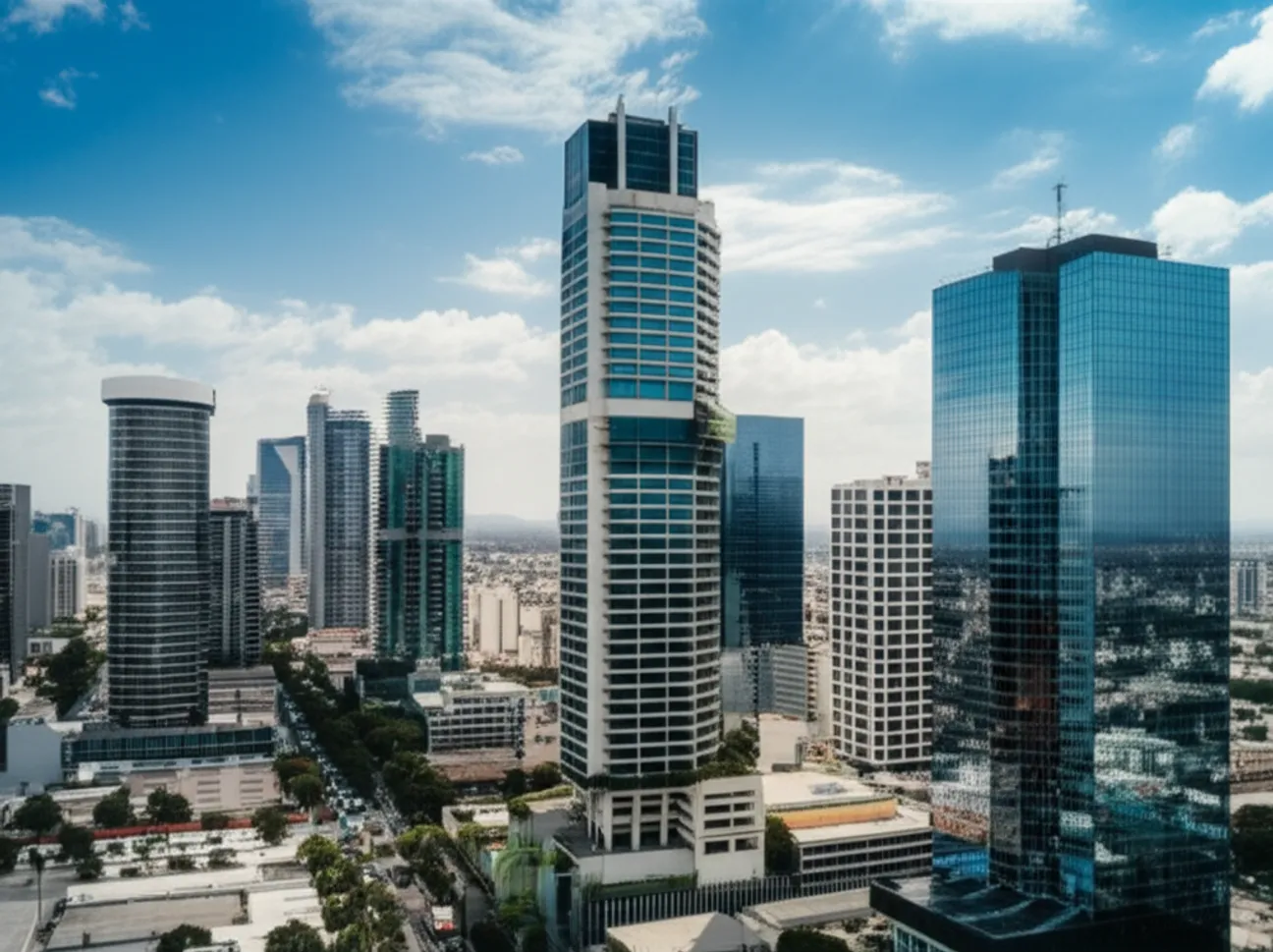
Monterrey capital is redefining Mexico's infrastructure with multibillion-dollar bets
Federico Garza Santos, Eduardo Osuna, Eudelio Garza Mercado, and Luis Rosendo Gutiérrez Romano are shaping a financial hub that challenges Mexico City's dominan
Executive Summary
Key Takeaways
- Monterrey is consolidating as Mexico's second financial hub, challenging Mexico City's infrastructure dominance.
- Grupo Inmobiliario Monterrey (GIM) announced over $3 billion in investments across three Nuevo León projects, generating more than 45,000 jobs.
- The Infrastructure Plan 2026-2030 encompasses 5.6 trillion pesos, requiring unprecedented private participation.
- Fibra Mty closed a syndicated credit facility of up to $265 million, demonstrating regional financial maturity.
- The 2026 USMCA review will be decisive for investor confidence in infrastructure.
Monterrey capital is redefining Mexico's infrastructure with multibillion-dollar bets
For decades, the financing of major infrastructure projects in Mexico revolved around a handful of institutions and family offices concentrated in Mexico City. That geography of capital is shifting. Monterrey, the country's second financial hub, is emerging as the epicenter of investment decisions that combine institutional banking, trust vehicles, and metropolitan-scale urban development. The names driving this movement — Federico Garza Santos, Eduardo Osuna, Eudelio Garza Mercado, and Luis Rosendo Gutiérrez Romano — represent complementary logics within the same ecosystem: sophisticated financial structuring, large-scale credit capacity, integrated real estate development, and alignment with federal trade policy.
The context amplifies the relevance of these players. The Infrastructure Investment Plan for Development with Well-Being 2026-2030, promoted by President Claudia Sheinbaum, allocates resources of 5.6 trillion pesos, according to figures released by BBVA México and reported by El Heraldo de México in February 2026. The program's magnitude demands unprecedented private sector participation, and Monterrey's capital is positioning itself to capture a significant share of that flow.
Who are the Monterrey financial players leading investment in Mexican infrastructure?
The map of Monterrey-based capital oriented toward infrastructure is structured along four vectors distinguishable by function but connected by geography and business trust networks.
Eudelio Garza Mercado and Grupo Inmobiliario Monterrey (GIM) represent the large-scale development side. According to Industry & Energy Magazine, GIM announced in February 2026 an investment exceeding $3 billion spread across three projects in Nuevo León. The most ambitious, Centro Urbano Norte, known as Canadá City Center, alone concentrates an investment of $2.223 billion. The three projects, which also include Sultana and the Sendero-Las Torres Road Complex, will generate more than 45,000 direct and indirect jobs during construction and operation. Garza Mercado embodies a development model where road infrastructure, urban densification, and foreign investment attraction converge within a single portfolio. The Sendero-Las Torres Road Complex, for example, projects estimated annual savings of 5,000 pesos per user by reducing commute times — an indicator that connects private investment with public mobility impact.
This integration of transportation infrastructure with real estate development constitutes a trend that sector analysts are observing with growing attention in forums such as those organized by GRI Institute in Latin America, where the convergence between private capital and urban planning is a recurring theme.
Federico Garza Santos, heading Fibra Mty, operates in the realm of specialized financial structuring. Fibras (Real Estate Investment Trusts) have established themselves as essential vehicles for channeling institutional capital toward productive infrastructure assets. In February 2026, Fibra Mty entered into a syndicated credit agreement led by Banorte for up to $265 million, aimed at extending debt maturities, as reported by Grupo Milenio. The transaction reveals two strategic signals: the ability of a Monterrey-based vehicle to access syndicated financing at a relevant scale and the banking system's confidence in the soundness of its portfolio.
Fibra Mty, under the chairmanship of Garza Santos, demonstrates that Monterrey has mature financial instruments capable of competing with vehicles from the country's central corridor in attracting capital for logistics and industrial infrastructure.
Eduardo Osuna, heading BBVA México, contributes the institutional banking dimension. BBVA México is the country's largest bank by loan portfolio, and Osuna has been vocal in stating that banks have the resources ready to participate in the Infrastructure Plan 2026-2030, conditioning that willingness on clear rules and certainty in project execution. This stance defines the tone of the relationship between private capital and the federal government: willingness to invest accompanied by a demand for institutional frameworks.
The signal Osuna sends is relevant to the entire Latin American infrastructure ecosystem. Mexican commercial banking, with Monterrey as the operational base for its key credit decisions, will be decisive in the financial viability of projects included in the federal plan of 5.6 trillion pesos.
Luis Rosendo Gutiérrez Romano completes the picture from the regulatory and trade dimension. Appointed Deputy Secretary of Foreign Trade at the Ministry of Economy in October 2024, according to Expansión, Gutiérrez Romano will be a key player in the USMCA review scheduled for 2026. The outcome of that negotiation will directly impact investor confidence and, by extension, capital flows into infrastructure. His Monterrey roots and knowledge of northern Mexico's business fabric make him a natural intermediary between Nuevo León's private sector and the federal foreign trade agenda.
Why is Monterrey consolidating its position as Mexico's second infrastructure financing hub?
The concentration of financial, industrial, and logistics capabilities in Nuevo León responds to structural factors that the nearshoring phenomenon has accelerated. Proximity to the United States, the density of the manufacturing base, and the presence of financial institutions with national reach create conditions for Monterrey capital to transcend the regional sphere and participate in shaping national infrastructure.
Three elements distinguish the Monterrey hub from Mexico City's financial axis. First, the vertical integration between real estate development and transportation infrastructure, visible in projects like those of GIM, where a single entity executes road works and mixed-use urban developments. Second, the presence of specialized financial vehicles like Fibra Mty, which channel institutional capital with corporate governance aligned to international standards. Third, the cultural and operational proximity to northern industrial corridors, which allows for a more precise reading of logistics infrastructure needs driven by nearshoring.
Monterrey capital operates with an asset-proximity logic that grants it informational advantages over competitors from the country's center. That advantage translates into execution speed and the ability to structure projects that combine financial returns with territorial competitiveness impact.
What role will the USMCA review play in infrastructure investment decisions?
The review of the United States-Mexico-Canada Agreement, scheduled for 2026, introduces an uncertainty factor that permeates all long-term infrastructure investment decisions in Mexico. The presence of Luis Rosendo Gutiérrez Romano as Deputy Secretary of Foreign Trade places a profile with Monterrey roots at the center of a negotiation that will determine market access conditions for manufacturing based in northern Mexico.
For infrastructure investors, the outcome of the USMCA review will define future demand for industrial facilities, logistics corridors, energy infrastructure, and digital connectivity in border states. The regulatory certainty that Eduardo Osuna demands from BBVA México takes on a concrete dimension in this context: without clarity on trilateral trade rules, long-term capital commitments face risk premiums that can inhibit strategic projects.
The convergence between trade policy and infrastructure financing will be one of the central themes in dialogue spaces that bring together sector leaders, such as GRI Institute's gatherings dedicated to Latin American infrastructure, where interaction between regulators and private capital enables scenario anticipation and strategy calibration.
An ecosystem that demands strategic attention
Monterrey's financial hub has ceased to be a regional complement to Mexico City's axis and has become a player with its own agenda in national infrastructure. The scale of GIM's investments, Fibra Mty's financial sophistication, BBVA México's credit capacity, and Gutiérrez Romano's institutional position at the Ministry of Economy form an ecosystem that deserves dedicated analytical monitoring.
The 5.6 trillion pesos of the Infrastructure Plan 2026-2030 will not be executed without active private capital participation. And a growing share of that capital speaks with a Monterrey accent. Understanding the logics, networks, and priorities of these players is a necessary condition for anticipating the direction of Mexico's infrastructure over the next decade.
GRI Institute will continue mapping these movements through its network of Latin American infrastructure leaders, generating strategic intelligence for those making the investment decisions that transform the territory.